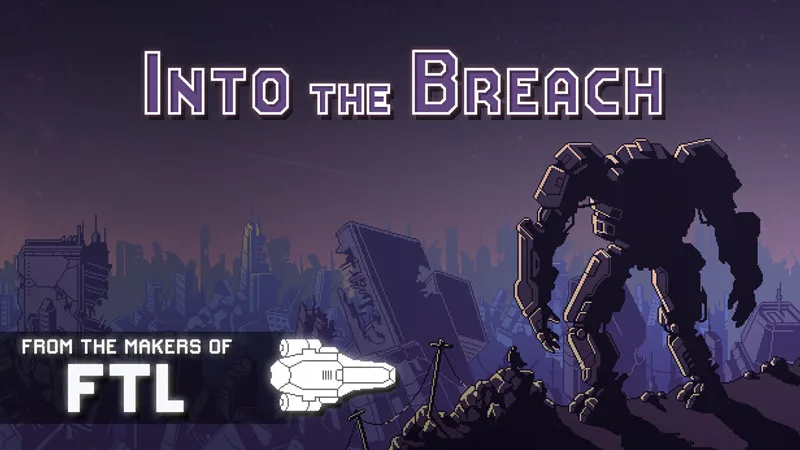
Into the Breach looks tiny at first. Three mechs, a small grid, insects that politely announce their attacks. Then the trap becomes clear: the game rarely asks you to make a brilliant turn. It asks you to make the turn that leaves the planet standing.
That is the cleanest way to improve. Do not start by asking how to kill the most Vek. Start by asking how to cancel damage, move threats and keep enough room for the next turn.
The mental rule that changes everything
Every turn should be read in layers. Start with the buildings under threat, then look for attacks that can be cancelled by movement. After that, check which mech can take damage without breaking the mission. The kill comes later, only if it does not create a worse problem. Finally, ask whether blocking a spawn is worth immobilizing the unit that stands on it.
This hierarchy changes the entire game. Beginners often lose because an enemy is in range and they shoot. Stronger players look at grid power first. A living Vek pushed into the wrong square is often a better result than a dead Vek after a building collapses.
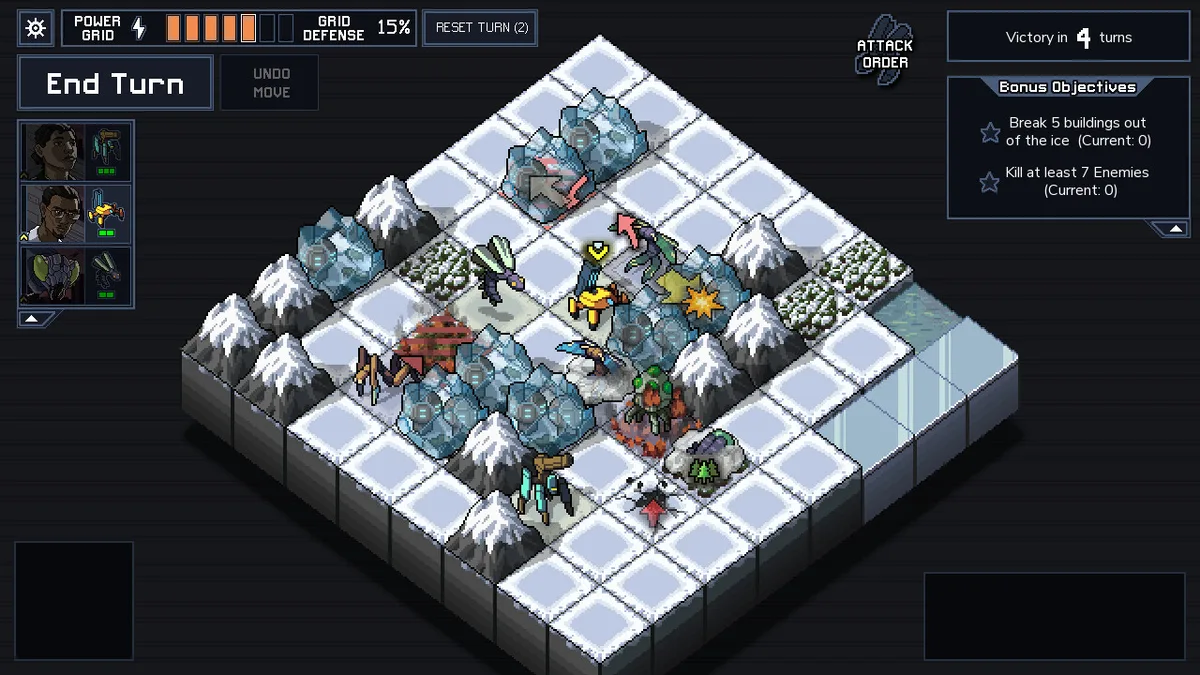
The useful sentence is simple: Into the Breach is not asking you to dominate the turn. It is asking you to survive it cleanly enough that the next one stays solvable.
Why the 8x8 grid works
Into the Breach is harsh because it is honest. Enemy intentions are visible. The map is small. Combat rules are readable. When everything falls apart, it is rarely because the game cheated. It is usually because one threat was misread two turns earlier.
Pushing matters more than damage because a single tile can change five outcomes. You can save a building, force an enemy shot into empty space, make one Vek hit another, push a unit into water, fire, acid or a mountain, or clear a spawn tile at the exact moment it matters.
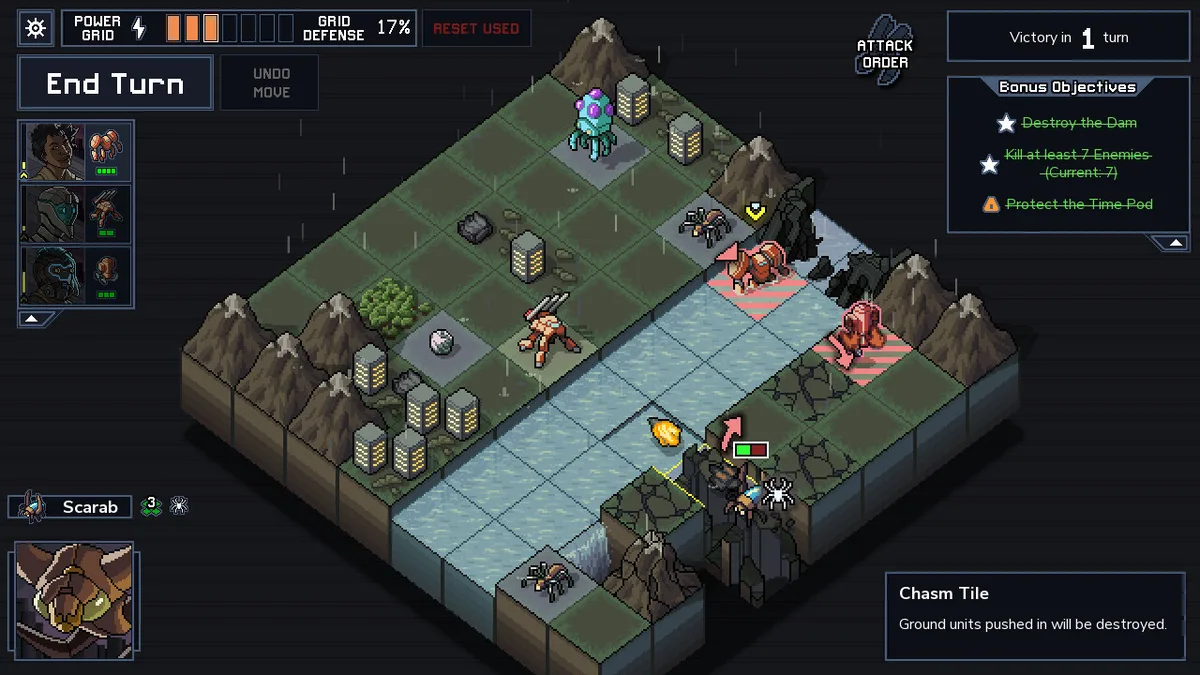
That is why the game still feels fresh years later. It does not need a huge ability bar. It needs a few tools with sharp consequences.
Which squads teach the right lessons?
Rift Walkers are the clearest starting point because they teach the basics without a lot of special vocabulary. After that, pick a squad according to the mistake you want to fix.
| Squad | What it teaches | Main risk |
|---|---|---|
| Rift Walkers | Pushing, direct damage, priorities | Feeling too safe too early |
| Rusting Hulks | Smoke and area control | Lacking direct damage |
| Frozen Titans | Defensive freezing and timing | Blocking your own options |
| Steel Judoka | Pure repositioning | Solving very abstract turns |
| Bombermechs | Mines and terrain planning | Creating your own chaos |
Advanced Edition made the game more generous, but not messier. The added squads bring ideas rather than padding. That is rare, and it is one reason the update remains a strong excuse to return in 2026.
Mistakes that end a run
The first mistake is protecting mechs before buildings. A wounded mech can finish a mission. A grid at zero cannot negotiate.
The second mistake is blocking every spawn without asking what happens next. Blocking an emergence tile deals damage and delays a Vek, but it also freezes your unit in place. If that mech becomes unable to answer the following turn, you have bought a debt.
The third mistake is undervaluing secondary objectives. They are not always worth a building, but the reactor cores they provide make later islands cleaner. Failing an early objective can deny you the upgrade that would have saved the final stretch.
Upgrading a squad without breaking its logic
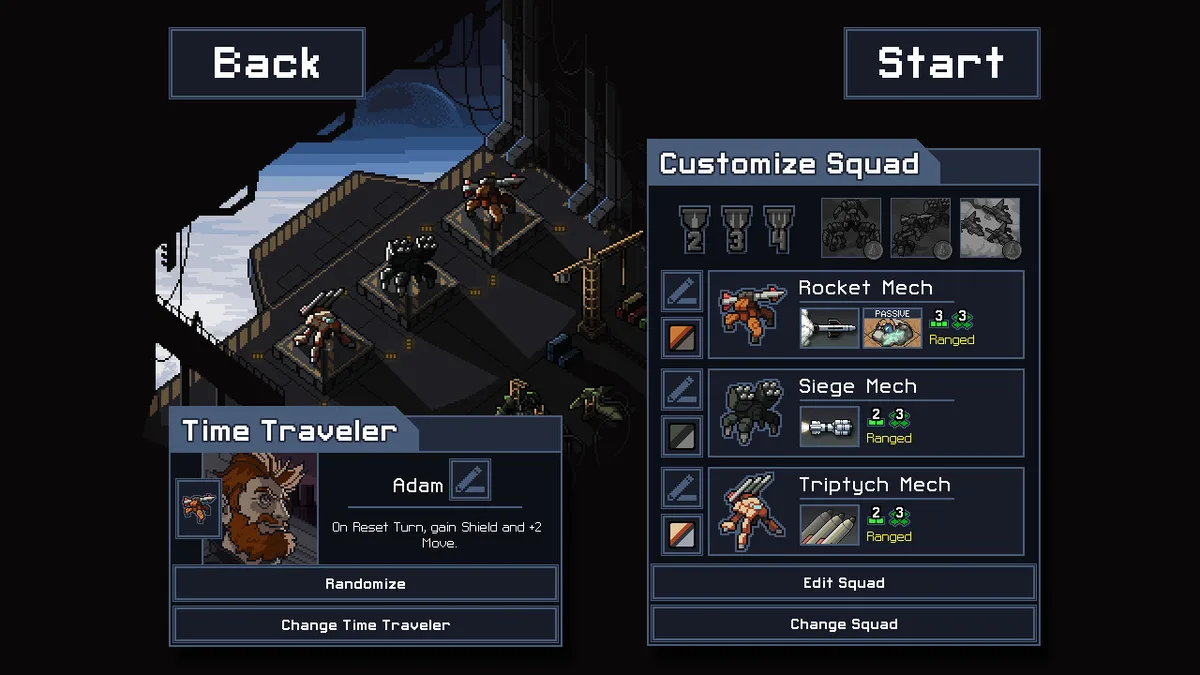
Reactor cores are scarce, so each upgrade should reinforce what your squad actually does. A push-focused mech often needs range, safety or a secondary effect more than raw damage. A mech that already hits hard may become more reliable with a movement option that stops it from being trapped behind allies.
The useful question before buying a weapon is not “is this strong?”. It is: which impossible turn does this weapon make solvable? A diagonal push, a smoke effect or a freeze can be worth more than a dramatic cannon because it opens a line when three buildings are threatened at once.
Pilots follow the same logic. A movement bonus can turn an average unit into a permanent emergency tool. A pilot that survives better allows more aggressive spawn blocks. A damage bonus looks tempting, but it does not help much if your real weakness is arriving too late on the right tile.
Quick diagnosis after a failed island
Read the run by failure type. If buildings died because attacks came from opposite corners, your squad probably lacked mobility or map control. If Vek survived on one health too often, you may need one direct damage upgrade. If spawn blocks created worse turns, your mechs were probably standing on emergence tiles without enough movement to recover.
Then look at the mission objectives. Failed train missions, broken satellites and lost power pylons usually point to a positioning problem, not a damage problem. Into the Breach improves when you can name the missing tool: push, pull, freeze, smoke, flight, extra movement, or a weapon that solves two threats with one action.
Good failure is information
Into the Breach has one rare quality: a defeat can be legible. If you lose an island, name the type of turn that broke you. Was it lack of pushing? Lack of mobility? Too little direct damage? A squad unable to protect two distant buildings? That reading is more useful than a tier list because it tells you what tool you actually lack.
Over time, you also see maps differently. A mountain is no longer scenery; it is a collision wall. A water tile becomes a possible execution. An isolated building signals a future positioning debt. The game does not change, but your eye becomes sharper, and that is where the progress feels satisfying.
Practical case: the turn where nobody has to die
A typical turn may show three Vek threatening two buildings and one mech. The spectacular move would be to kill one enemy. The stronger move may be quieter: push the first Vek so it misses, move the second so it hits the third, and let your mech take one damage because the grid remains intact. The final board looks less heroic, but the mission continues with an acceptable loss.
That is where the game reveals its elegance. It does not reward domination. It rewards a cold reading of consequences. A solid run is built from modest decisions: losing one health in the right place, giving up a secondary reward, or blocking a spawn only when the unit can still act next turn.
Sources and media
This rewrite uses the Steam page for Into the Breach and Subset Games’ official page. The screenshots above are official Steam media tied to steamAppId 590380.
Verdict
Into the Breach remains a model of tactical design because it never confuses depth with overload. It gives you few tools, but every tool matters. Progress is not about finding a magic recipe. It is about looking at an impossible turn and calmly asking which damage can be moved somewhere else.
If XCOM taught you to hope for a favorable percentage, Into the Breach teaches the opposite. When information is perfect, excuses disappear. That is harsh, elegant and still quietly brilliant.
For more tactical strategy, read our XCOM 2 guide and our top PC strategy games 2026.
FAQ
Is Into the Breach hard?
It is readable but demanding. The difficulty comes less from randomness than from accepting the least damaging result each turn.Which squad should beginners pick first?
Rift Walkers remain the clearest tutorial in disguise: direct damage, simple pushing and enough answers for the first islands.What does Advanced Edition change?
It adds squads, pilots, weapons, enemies and missions for free. In 2026, it is the version to consider standard.
- Into The Breach
- Subset Games
- #Tactics
- Roguelike
- Indie
- Guide