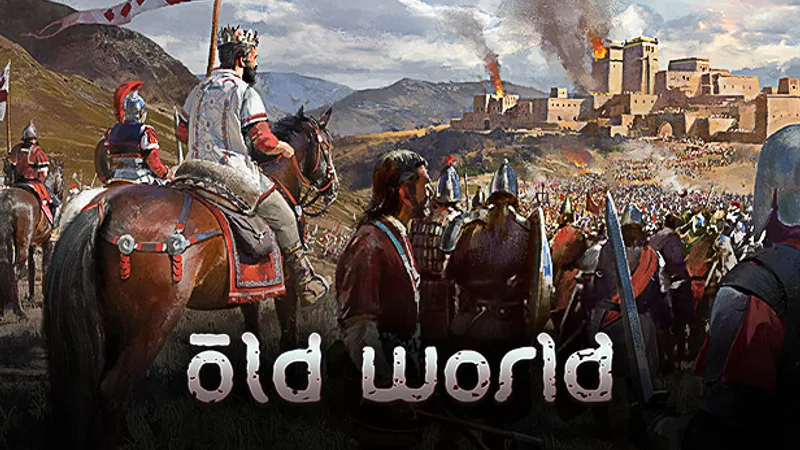
Introduction: What Makes Old World Special
Old World is the creation of Soren Johnson, the legendary designer behind Civilization IV — widely considered the best entry in that franchise. Rather than making “another Civ,” Johnson founded Mohawk Games and spent years crafting something genuinely new: a 4X strategy game that fuses the empire building of Civilization with the character-driven drama of Crusader Kings, all set in the rich period of classical antiquity.
Released in 2022 after an Epic Games Store early access period and later arriving on Steam and GOG, Old World has quietly become one of the most respected strategy games of the decade. It doesn’t have the massive marketing budget of Civilization VII or the spectacle of Total War, but among dedicated strategy players, it commands enormous respect.
If you’re exploring the 4X landscape, see where Old World fits in our best PC strategy games 2026 ranking.
The Seven Civilizations of Old World
Old World focuses exclusively on the ancient world, spanning roughly from 3000 BCE to the early centuries CE. Each of its seven civilizations offers a distinct playstyle rooted in historical identity.
Greece
Greece excels at culture and science. Their unique ability grants bonus culture from urban tiles, and their unique units — the Hoplite (replaces Spearman) and the Hetairoi cavalry — are formidable in the early and mid game. Greece is ideal for players who want to build a culturally dominant civilization while maintaining a strong defensive military.
Key Strategy: Rush Scholarship technology to unlock Libraries, then snowball your science lead. Use Hoplites to form defensive lines while your cities generate massive culture.
Rome
Rome is the military and infrastructure powerhouse. Romans gain reduced costs for military units and can build roads more efficiently. The Legion (replacing Swordsman) is one of the strongest mid-game units in Old World, and the Roman ability to project military power across the map is unmatched.
Key Strategy: Expand aggressively with 3-4 cities, build Legions as soon as possible, and use your infrastructure bonuses to connect your empire with roads for rapid reinforcement.
Persia
Persia is the economic giant. Their unique ability generates extra money from trade routes and luxury resources. The Immortals (replacing Macemen) are excellent defensive infantry that can hold the line while Persia’s economy funds a massive army later. Persia excels at playing the long game.
Key Strategy: Focus on trade route generation and luxury acquisition. Use your economic advantage to field a larger army than opponents can sustain. Persia peaks in the late game when gold reserves become decisive.
Babylon
Babylon is the science civilization. Their unique ability boosts research speed, and their cities naturally generate more science. Babylon wants to rush through the tech tree, unlocking advanced units and buildings before opponents. Their unique units are defensively oriented, reflecting a strategy of peaceful tech advancement protected by solid defenses.
Key Strategy: Prioritize science buildings in every city. Research aggressively toward advanced military technologies. By the mid-game, you should have a significant tech lead that translates into better units and buildings.
Egypt
Egypt is the builder’s paradise. Their unique ability accelerates Wonder construction and provides bonuses to urban tile yields. Egypt wants to build tall — fewer cities, but each one packed with Wonders and improvements. Their unique units, including War Chariots, provide early military muscle.
Key Strategy: Focus on building Wonders aggressively. Each Wonder provides significant bonuses and victory points. Keep 2-3 strong cities rather than spreading thin, and defend them with your unique units while building an impressive civilization.
Carthage
Carthage is the naval and commercial empire. Their unique ability enhances naval units and coast-adjacent cities. Carthage excels on maps with significant water, where their naval dominance can control trade and project power. The War Elephant unique unit is one of the most powerful military units in the game.
Key Strategy: Settle coastal cities to maximize your naval bonuses. Use your commercial advantages to fund War Elephants — they’re expensive but devastating in combat. Control sea routes to deny opponents trade income.
Assyria
Assyria is the aggressive conqueror. Their unique ability provides bonuses when capturing cities and defeating enemy units. Assyria wants to fight early and often, using military victories to fuel further expansion. Their unique units are designed for offense, with siege capabilities that make city assaults more efficient.
Key Strategy: Build military units immediately and attack your nearest neighbor within the first 30-40 turns. Each captured city fuels your war machine further. Don’t try to play peacefully as Assyria — the civilization’s mechanics reward constant warfare.
The Orders System: Old World’s Revolutionary Mechanic
The Orders system is what fundamentally separates Old World from every other 4X game on the market, and understanding it is the key to mastering the game.
How Orders Work
Each turn, you receive a pool of Orders based on your Legitimacy score, your leader’s Charisma stat, and various bonuses from buildings, technologies, and events. A typical early-game turn might give you 3-5 orders, while a well-managed late-game empire might generate 10-15.
Every action costs orders. Moving a unit costs one order. Attacking costs one order. Building an improvement costs one order. This means that on any given turn, you can only perform a limited number of actions. The strategic implications are enormous:
- You can’t move every unit every turn. Armies sitting idle don’t cost orders, but you can’t reposition everything simultaneously.
- Choosing what to do is as important as choosing how to do it. Do you move your army forward or build improvements in your city? Both cost orders.
- High-Legitimacy leaders are objectively better because they generate more orders. This makes succession planning crucial — you want charismatic, legitimate rulers.
Maximizing Your Orders
Several strategies help you get the most from your order pool:
| Source | Effect | How to Get It |
|---|---|---|
| High Legitimacy | +1-3 orders per turn | Keep court happy, complete ambitions, build Wonders |
| Leader Charisma | +1-2 orders per turn | Choose/groom charismatic heirs |
| Government Civics | +1-2 orders per turn | Research and adopt order-boosting civics |
| Courtier Abilities | Situational bonuses | Appoint generals and governors with relevant traits |
| Wonders | Flat bonuses | Build order-generating Wonders |
The most impactful thing new players can do is stop wasting orders. Every unused order at end of turn is lost. If you have orders remaining, use them — move scouts, queue improvements, reposition garrisons. Efficiency with orders separates good players from great ones.
Character and Dynasty Mechanics
Old World’s character system is where the Crusader Kings influence shines brightest. Every leader, heir, courtier, general, and governor is a fully realized character with stats, traits, relationships, and a personal story.
Leader Stats
Your ruler has four key stats:
- Charisma — affects Legitimacy and diplomatic relationships. High Charisma leaders generate more Orders.
- Courage — affects military combat bonuses when the leader personally commands an army.
- Discipline — affects city production and worker efficiency.
- Wisdom — affects research speed and cultural output.
Succession and Dynasty
When your leader dies, their heir takes over. This is a critical moment — a bad succession can cripple your empire for decades. Plan ahead:
- Educate your heirs. Assign tutors that develop the stats you need. A future wartime leader needs Courage; a builder needs Discipline.
- Arrange marriages strategically. Spouses bring stats, traits, and diplomatic connections. Marrying into a rival civilization’s dynasty can prevent wars.
- Manage your court. Unhappy courtiers can rebel, assassinate leaders, or defect. Keep key characters satisfied through events, gifts, and appointments.
The Event System
Old World generates hundreds of narrative events based on your characters, their relationships, and the state of your empire. These events are not random fluff — they have meaningful mechanical consequences:
- A jealous general might rebel and take his army with him.
- A diplomatic marriage might prevent a war — or trigger one if it goes sour.
- Your heir might develop a drinking problem that tanks their stats.
- A brilliant courtier might offer a revolutionary technology shortcut.
The event system ensures that no two playthroughs feel the same. Even playing the same civilization on the same map, the characters and events create entirely different stories.
Military Strategy
Unit Types and Roles
Old World features a diverse military roster organized into clear categories:
| Category | Units | Strengths |
|---|---|---|
| Infantry | Militia, Spearman, Swordsman, Maceman | Defensive, cheap, good in terrain |
| Ranged | Slinger, Archer, Crossbowman | Damage from distance, fragile |
| Cavalry | Scout, Horseman, Knight, Horse Archer | Fast, flanking bonuses, map control |
| Siege | Battering Ram, Catapult, Siege Tower | City assault specialists |
| Naval | Bireme, Trireme, Galley | Water control, coastal support |
Combat Mechanics
Combat in Old World uses a deterministic system — no random dice rolls for damage. When you attack, the game shows you the exact outcome before you commit. This transparency rewards careful tactical planning.
Key combat principles:
- Flanking is powerful. Units attacking from multiple sides deal significantly more damage. Cavalry excel at getting into flanking positions.
- Terrain matters. Hills provide defensive bonuses. Rivers slow movement. Forests provide cover. Use terrain to your advantage.
- Generals improve armies. Assigning a character as a general to an army provides stat-based combat bonuses. A high-Courage general leading a stack of Legions is devastating.
- Fatigue accumulates. Units that fight repeatedly without rest become less effective. Rotate fresh units to the front line.
Siege Warfare
Capturing cities requires dedicated siege units or prolonged assault. Cities have HP and defense values that must be ground down:
- Move siege units adjacent to the target city. Battering Rams and Catapults deal bonus damage to city defenses.
- Bombard the city to reduce its HP. This costs orders each turn.
- Assault when HP is low with infantry to capture. The first unit into a captured city claims it.
- Consider starving the city by pillaging surrounding improvements if you have time. Cities without food lose HP over time.
Diplomacy and Foreign Relations
Old World’s diplomacy system is deeply influenced by character relationships. Unlike Civilization where AI behavior follows abstract leader agendas, Old World’s AI leaders have personal feelings toward you based on events, marriages, insults, and history.
Diplomatic Actions
- Declare Friendship/War — standard diplomatic states with mechanical effects.
- Arrange Marriages — marry characters between nations to improve relations and gain stat bonuses.
- Send Gifts/Insults — directly modify relationship values.
- Trade Luxury Resources — exchange luxuries for money or other resources.
- Make Demands — pressure weaker nations into concessions.
Managing AI Relations
The AI in Old World is regarded as excellent by genre standards. It responds logically to your actions, remembers past interactions, and behaves consistently with its civilization’s personality. Tips for managing AI:
- Don’t border-creep aggressively. Settling cities near AI borders provokes hostility.
- Honor your commitments. Breaking truces or betraying allies has long-lasting diplomatic consequences.
- Use marriages proactively. A well-timed royal marriage can turn a potential enemy into a long-term ally.
Victory Conditions
Old World offers five paths to victory, providing flexibility in how you play:
- Ambition Victory — Complete 10 Ambitions (dynamic goals assigned throughout the game). This is the most organic victory condition and the one most recommended for new players.
- Victory Point Double — Reach double the starting Victory Point threshold. VP comes from Wonders, technologies, territories, and events.
- All Victory Points — Control all VP sources on the map. Essentially a domination variant.
- Score Victory — Have the highest score when the turn limit expires. The default “safe” victory for cautious players.
- Elimination — Destroy all rival civilizations. The most straightforward but often the most time-consuming.
DLC and Expansions
Heroes of the Aegean
This expansion adds six historical scenarios set in ancient Greece, from the Persian Wars to Alexander’s conquests. Each scenario has unique rules, win conditions, and narrative events. It’s excellent for players who want guided historical experiences rather than open sandbox play.
Pharaohs of the Nile
The most substantial expansion adds Egypt-focused content including new leaders, events, and the unique Nile flooding mechanic that affects Egyptian cities differently each year. It also adds new Wonders and technologies specific to Egyptian civilization.
Behind the Throne
A major expansion focusing on court intrigue mechanics, adding deeper character interactions, new event chains, and expanded dynasty management. This DLC is particularly recommended for players who enjoy the Crusader Kings-like elements of Old World.
Old World vs. Civilization VII: A 2026 Comparison
With Civilization VII now available, many strategy fans are comparing the two. Here’s an honest assessment:
| Aspect | Old World | Civilization VII |
|---|---|---|
| Scope | Ancient era only | All of human history |
| Depth per turn | Very high (Orders system) | Moderate (one move per unit) |
| Character drama | Exceptional | Minimal |
| Visual spectacle | Clean, functional | High production value |
| Learning curve | Steep | Moderate |
| Multiplayer | Excellent async play | Large-scale online |
| Modding | Growing | Extensive |
Choose Old World if you want deeper per-turn decisions, character-driven narrative, and a focused historical setting. Choose Civilization VII if you want broader scope, flashier presentation, and a larger community.
Both are excellent games, and many strategy fans play both. They scratch different itches despite sharing a genre.
Tips for Advanced Players
Once you’ve mastered the basics, these advanced techniques will elevate your play:
- Orders banking — Some civics and abilities let you carry orders between turns. This allows burst turns where you accomplish significantly more than normal.
- Governor optimization — Assign governors to cities based on what the city needs. A high-Discipline governor in a production city is more valuable than a high-Wisdom governor.
- Ambition manipulation — You can influence which Ambitions appear by controlling your empire’s state. Knowing this lets you chain Ambitions efficiently for a fast Ambition Victory.
- Courtier trait farming — Through events and education, you can develop specific traits in courtiers that provide powerful bonuses when they’re appointed to positions.
Conclusion
Old World represents the best of modern 4X design — a game that respects your time and intelligence while delivering emergent stories that rival dedicated narrative games. The Orders system alone is worth the price of admission, transforming every turn into a meaningful puzzle of prioritization.
For fans of historical strategy, character-driven gameplay, or anyone tired of the Civilization formula’s repetitive late-game grind, Old World is an essential experience. It proves that innovation in a well-established genre isn’t just possible — it’s thriving.
Explore more 4X options in our Age of Wonders 4 guide and the complete best PC strategy games 2026 ranking.
FAQ
How does Old World compare to Civilization?
Old World shares the 4X foundation with Civilization but differs in key ways. It uses an Orders system instead of one-move-per-unit, focuses on a single historical era (antiquity) rather than spanning all of history, and features deep character and dynasty mechanics similar to Crusader Kings. Many players describe it as the best parts of Civ meets the best parts of CK.What is the Orders system and how does it limit my actions?
Instead of moving every unit once per turn, Old World gives you a pool of Orders each turn. Every action — moving a unit, attacking, building — costs orders. This means you must prioritize: you can't do everything every turn. High-Legitimacyrulers generate more orders, making leadership quality mechanically important.Does Old World have multiplayer?
Yes. Old World supports online multiplayer for up to 8 players, including both synchronous (real-time turns) and asynchronous cloud-based play (play-by-cloud). The async mode is particularly popular — you take your turn when convenient and opponents are notified. It's perfect for strategy fans with busy schedules.Is the single-player narrative system good?
Old World's narrative event system is one of its strongest features. Hundreds of dynamic events fire based on your leaders, courtiers, generals, and diplomatic relationships. Events range from succession crises and court intrigue to personal dramas and military dilemmas. It gives every playthrough a unique story that emerges organically from your decisions.Which civilization is best for beginners in Old World?
Rome is the most recommended starter civilization. Romans get bonuses to military unit maintenance and can build excellent infrastructure. Their unique units are straightforward, and Roman strategies tend to be flexible — you can pursue military, cultural, or economic victory without feeling pigeonholed.Is Old World still being updated in 2026?
Yes. Mohawk Games continues to support Old World with balance patches, new events, and DLC content. The Heroes of the Aegean and Pharaohs of the Nile expansions added significant content. The developer's commitment to the game has been exemplary, with community feedback directly influencing updates.
- old-world
- mohawk-games
- historical-4x
- antiquity