---
title: "Star Wars Zero Company: Class System, Advantage Mechanic and Strategic Layer Explained"
description: "Five weeks before its August 27 launch, we break down Zero Company's key mechanics: 8 classes, shared Advantage, immersive 3D base, and dynamic enemy faction pressure."
url: https://after-strategy.com/en/star-wars-zero-company-class-system-mechanics-guide-2026/
lang: en
published: 2026-07-21
author: "Simon Dougnac"
author_url: https://after-strategy.com/en/auteur/simon/
game: "Star Wars Zero Company"
game_url: https://after-strategy.com/en/jeux/star-wars-zero-company/
categories: [tour-par-tour]
tags: [star-wars-zero-company, bit-reactor, ea, tactical, clone-wars, turn-based, xcom-like]
translations:
fr: https://after-strategy.com/fr/star-wars-zero-company-mecanique-classes-analyse-2026/
es: https://after-strategy.com/es/star-wars-zero-company-clases-mecanicas-analisis-2026/
publisher: "After Strategy"
---
# Star Wars Zero Company: Class System, Advantage Mechanic and Strategic Layer Explained
> Five weeks before its August 27 launch, we break down Zero Company's key mechanics: 8 classes, shared Advantage, immersive 3D base, and dynamic enemy faction pressure.
## Ex-XCOM devs, a Star Wars license — and their own rulebook
Zero Company does not pitch itself as XCOM with lightsabers. Bit Reactor, a studio founded by Firaxis veterans, has built its own architecture. Five weeks before the August 27, 2026 launch, PC Gamer's observed demonstrations outline a game willing to take several design risks.
Three pillars define the experience: a two-tier class system, a shared resource called Advantage, and a third-person explorable base. These are the elements that will determine whether Zero Company is a spiritual XCOM 2 successor or simply a solid-but-mid licensed tactical.
### 8 standard classes, 4 exotic classes: two tiers, two philosophies
Zero Company's roster works on a hard split. The 8 standard classes are freely assignable to any character — Hawks, custom recruits, or story members — and can be respecced at any time outside of a mission. This is a freedom XCOM 2 never offered; it locked classes at recruitment and made every wrong choice permanent.
The 4 exotic classes, by contrast, are permanent and tied to specific story characters. The most concrete example: the customizable astromech droid has its own exclusive class focused on support and grenades. This rigidity is deliberate — these characters define their narrative role as much as their tactical function.
For XCOM veterans, the "flexible standard + locked exotic" combination creates genuine roster tension. You can adapt mission to mission, but you can't reinvent everything.
### The Advantage resource: replacing XCOM's Time Units with squad synergy
Each squad member has 3 Action Points (AP) per turn. Movement and attacks draw from the same pool, while some abilities can restore AP during a turn. Zero Company diverges further through Advantage, a collective resource available to the whole squad.
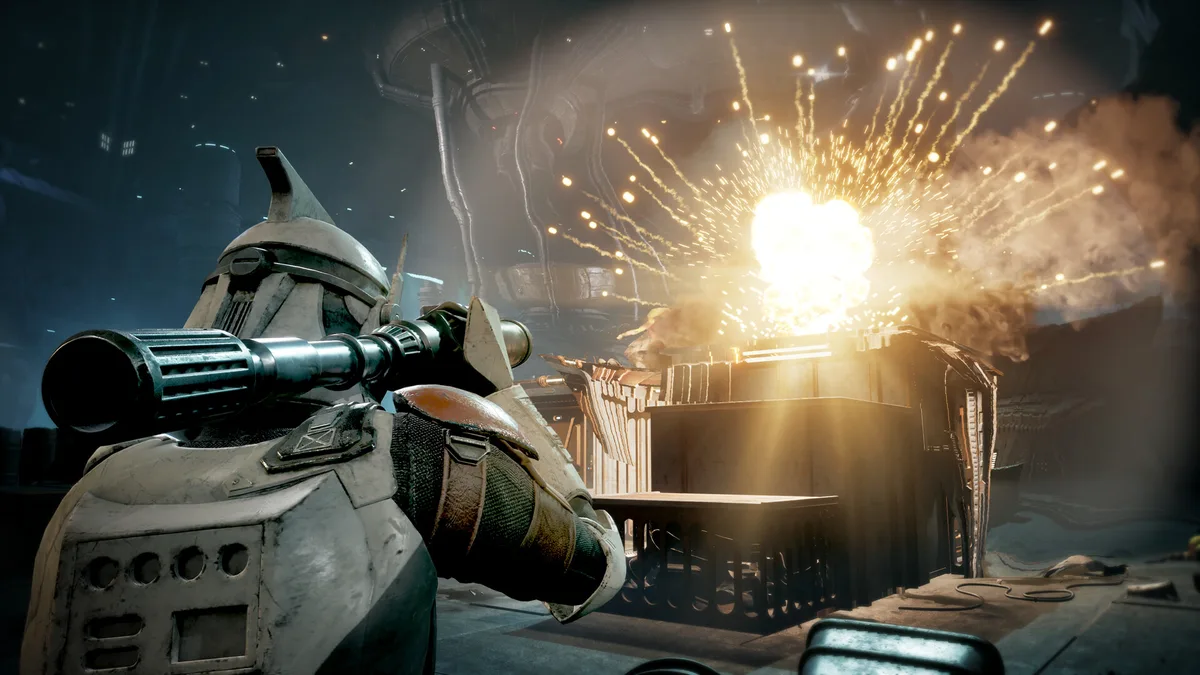
This shared pool powers major class abilities, including the Assault's multishot and the Heavy's area rocket. Hawks can spend a smaller amount to restore one AP to an ally. Because Advantage abilities do not consume AP, they can alter the optimal order of a turn instead of merely adding a final attack.
The risk: if Advantage generation lacks clarity, or if resource costs are opaque, the loop can become frustrating. That's the point to watch in the campaign's late stages, when enemy factions have accumulated power and the pressure is highest.
### The third-person base: genuine ambition or dead weight between missions?
Between missions, Zero Company doesn't fall back to an isometric management screen. The squad returns to a fully explorable third-person base with real-time movement and contextual dialogue. Squad bonds develop here — units frequently deployed together unlock combat synergies, combo abilities, and narrative arcs.
This is the game's riskiest design choice. A 3D base extends time between fights and demands compelling writing to justify itself rather than feel like friction. If those interactions land — Mass Effect and Baldur's Gate 3 prove it's possible — this layer could be Zero Company's standout feature.
If they don't, it'll be the main complaint.

## A Strategic Layer Wider Than the Mission List
EA says the galaxy map contains more than 150 planets. It frames the hunt for Kundri Fathom and the Infinite Coil, while the missions vary between hostage rescue, control-point defense, and direct elimination in the demonstrations documented by PC Gamer.
Those presentations do not yet prove that the map creates meaningful pressure. One hundred and fifty planets could support difficult priorities or merely multiply mission markers. The answer depends on what an ignored operation changes: enemy composition, resources, faction relationships, or just a delayed counter.
## Four Operators Leave No Room for Decorative Roles
The missions shown generally field Hawks plus three other operators. A four-person squad gives the class system immediate weight. An overspecialized role occupies a quarter of the team; an overly flexible class could erase composition choices altogether.
The eight standard classes offer one answer. A character the player likes is not trapped in a specialization that has become redundant. Exotic classes preserve a harder constraint: bringing a Jedi, Mandalorian, or astromech means accepting the combat identity attached to that character. On paper, that is a sensible compromise between free progression and authored identity.
One missing detail matters more than the raw class count: how often mission geometry and enemy types demand a particular tool. If every objective rewards the same damage-first squad, twelve classes become a catalogue. If terrain forces a choice between mobility, control, and firepower, composition becomes a real strategic decision.
## Permadeath gives class freedom its weight
Permadeath has been part of the plan since the reveal: [GamingBolt](https://gamingbolt.com/star-wars-zero-company-features-character-customization-permadeath-and-more) confirmed it back in April 2025, in classic XCOM fashion. It applies to operators, but not to Hawks, the player-created character, who cannot be lost for good. That rule changes how the class system reads. In XCOM 2, losing a high-ranking soldier meant losing their whole class progression with them. Here, the standard class outlives the character: another operator can take over the Assault or Heavy role between missions. What logically disappears are the bonds built in the Den and the cross-training perks they unlock. On paper, the penalty hits squad cohesion more than squad composition.
## What the Evidence Supports
The confirmed facts are substantial: three AP per operator, a shared Advantage gauge, eight standard classes, four exotic roles, an upgradeable base, and a galaxy map with more than 150 planets. That is enough to describe a tactics game with ambitions beyond a licensed reskin.
It is not enough to judge balance, enemy AI, or campaign pacing. This analysis uses official material and demonstrations observed by PC Gamer; After Strategy has not played this build. XCOM comparisons therefore explain structure, not quality.
## The Den Has to Earn Its Walking Time
EA's description of the Den names four practical functions: recruit operators, improve facilities, buy equipment, and select missions at the holotable. Character bonds can unlock support abilities and cross-training bonuses. Those are concrete systems, not merely cinematic decoration.
The uncertainty lies in access. A third-person base can make squad members feel present, but repeated walks between upgrade stations can also slow a tactics campaign. The Den pays off only if conversations change with the selected operators and if facility decisions create competing priorities. Otherwise, an interface would communicate the same information faster.
This distinction matters because Zero Company is a single-player game built around authored characters. The base must connect those characters to combat rather than hold the player between two battles. Bond bonuses are the clearest bridge disclosed so far; their frequency and tactical value remain unknown.
Price raises the standard further. EA lists the standard edition at $49.99 on PC and $59.99 on consoles. Zero Company is not positioned as a small licensed tactics game. At that price, the campaign needs to give all twelve classes, the Den, and the 150-planet map meaningful jobs instead of placing three attractive systems beside one another.
That is a demanding target.
### What to watch for on August 27
Zero Company arrives with a promising blueprint: flexible classes, shared Advantage, an upgradeable Den, and a galaxy map. Its XCOM lineage explains the vocabulary, but the shared movement-and-attack AP pool and Advantage already give it a distinct tactical grammar.
The real test is in the details: how deep the 4 exotic classes go (they'll separate advanced compositions from basic ones), how well the base's writing holds up, and whether the faction pressure system sustains its tension across the full campaign. The Star Wars license draws a wide audience, but these three points will define whether the game aims beyond it.
For the wider context, our [first Star Wars Zero Company preview](https://after-strategy.com/en/star-wars-zero-company-release-date-gameplay-preview-2026/) covers the setting, cast, and campaign. Main sources: [PC Gamer's mechanics overview](https://www.pcgamer.com/games/strategy/star-wars-zero-company-guide/), its [detailed class preview](https://www.pcgamer.com/games/strategy/star-wars-zero-company-is-more-than-just-star-wars-xcom-it-feels-like-mass-effect-but-with-turn-based-tactics-and-permadeath/), and [EA's official announcement](https://news.ea.com/press-releases/press-releases-details/2026/Command-the-Clone-Wars-Most-Cunning-Operatives-in-Star-Wars-Zero-Company-Launching-August-27/default.aspx).
## Sources
-
-
-
-
-
-
Source : [Star Wars Zero Company: Class System, Advantage Mechanic and Strategic Layer Explained](https://after-strategy.com/en/star-wars-zero-company-class-system-mechanics-guide-2026/) — After Strategy