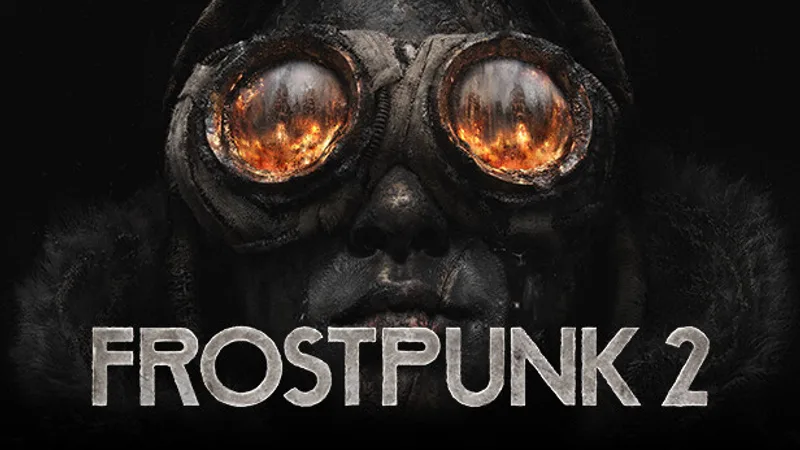
Frostpunk 2, the highly anticipated sequel from 11 bit studios, launched in September 2024 and redefined what a survival city-builder can be. Set 30 years after the Great Frost, it expands the scope from a single generator settlement to a sprawling industrial city grappling with resource scarcity, faction politics and existential frost storms. This complete 2026 guide covers everything you need to master this unforgiving frozen world.
Why Frostpunk 2 matters in the strategy genre
- Genre-defining survival city-builder — the original Frostpunk sold 5M+ copies and pioneered “society survival”
- Massive scale upgrade: from hundreds to thousands of citizens, from buildings to districts
- Deep political simulation: factions, council votes, ideological conflict — unprecedented in survival games
- Moral weight: every decision has consequences — there are no easy answers in the Frostlands
- Critical acclaim: praised for ambition, though its shift from micro to macro management divided some fans
If you enjoy grand strategy and city-building, Frostpunk 2 sits at a unique crossroads. For more strategy recommendations, check our top 10 PC strategy games 2026.
What’s new vs. Frostpunk 1
District-based city planning
The biggest mechanical shift: you no longer place individual buildings. Instead, you zone districts — residential, industrial, extraction, food — and they auto-populate with structures. This sounds simpler but is actually more strategically demanding: district placement, adjacency bonuses and expansion timing are critical.
Dual fuel economy
Coal remains important, but oil emerges as the new frontier. Oil is more efficient but harder to extract and politically contentious (some factions oppose industrialization). Managing the coal-to-oil transition is one of the game’s central strategic arcs.
Faction politics and the Council
Frostpunk 2’s boldest addition: political factions with competing ideologies sit on a city council. You must:
- Propose laws and secure enough votes to pass them
- Negotiate with faction leaders — make promises, trade favors
- Balance competing demands or risk a vote of no confidence (game over)
This transforms Frostpunk from pure survival into a political survival simulator.
Frostland exploration
Scouts explore the wider frozen world, discovering resources, survivors and story events. New colonies can be established, creating a network of settlements that feed the capital.
Core survival mechanics
Heat management
The generator remains your lifeline. Key principles:
- Generator range covers central districts; outlying areas need heat hubs
- Overdrive provides emergency heat but risks explosion
- Upgrade generator efficiency and range via research
- Insulation research reduces heat demand per district
Resource chain
| Resource | Source | Use |
|---|---|---|
| Coal | Extraction districts, mines | Heating, basic industry |
| Oil | Oil extraction, deep drilling | Advanced heating, vehicles |
| Food | Hothouses, hunting, food districts | Population sustenance |
| Materials | Salvage, production districts | Construction, upgrades |
| Prefabs | Workshops | Advanced construction |
| Heatstamps | Trade, economy | Currency, trade goods |
Population and workforce
- Citizens are assigned to districts rather than individual buildings
- Workforce shortages cripple production — balance growth with housing capacity
- Sickness and frostbite reduce available workers during cold snaps
- Children and elderly can be put to work via laws (moral cost, faction anger)
District management guide
Residential districts
Your population’s home. Key upgrades:
- Insulation — reduces heating demand
- Comfort — improves morale, reduces unrest
- Density — houses more people but increases disease risk
Industrial districts
Production centers for materials and prefabs. Place them adjacent to extraction zones for efficiency bonuses. Pollution affects nearby residential districts — plan your city layout carefully.
Extraction districts
Coal mines, oil rigs, material salvage. These are your economic engine. Key decisions:
- Worker safety vs. output: dangerous working conditions boost production but increase injuries and faction anger
- Expansion timing: opening new extraction zones requires scouts, materials and political will
- Depletion: resources run out — plan transitions early
Food districts
Hothouses and food processing. Food is the silent killer in Frostpunk 2 — neglect it and your population starves during whiteouts.
- Build food districts near heat sources for year-round production
- Stockpile aggressively before storm seasons
- Research advanced agriculture for better yields
Factions and politics: the heart of Frostpunk 2
The ideological axes
Factions form along two primary axes:
- Adaptation vs. Reason — traditionalists who embrace the cold vs. progressives who fight it with science
- Merit vs. Equality — elitists who reward the strong vs. egalitarians who share everything
Managing the Council
Passing laws requires majority votes. Strategies:
- Ally with 2 factions and keep the third manageable — trying to please everyone fails
- Promise strategically: broken promises destroy trust permanently
- Use the Community (unaffiliated citizens) as a swing vote
- Emergency powers bypass the council but generate massive long-term unrest
Laws and their consequences
Laws shape your society permanently. Examples:
- Child labor — boosts workforce but angers progressive factions
- Radical treatment — saves more sick citizens but some die from experimental medicine
- Guard stations — reduce crime but feel authoritarian
- Free expression — keeps progressives happy but enables protests
Every law is a trade-off. The game’s genius is that there are no objectively correct answers.
Optimal strategies for 2026
Early game (Days 1-30)
- Focus on heating and coal — secure your generator’s fuel supply immediately
- Build 2 residential districts near the generator for maximum heat coverage
- Research insulation first — it’s the most cost-effective survival upgrade
- Don’t expand too fast — overextension kills more cities than cold does
- Establish food production before your initial supplies run out
Mid game (Days 30-90)
- Transition to oil gradually — don’t abandon coal entirely
- Send scouts to discover new resource sites and survivor groups
- Pass foundational laws that align with your chosen faction allies
- Build a materials surplus for the expansion phase
Late game (Days 90+)
- Establish colonies to feed resources back to your capital
- Research advanced technology — late-game research unlocks powerful efficiency boosts
- Prepare for the final whiteout — the endgame storm is devastating
- Consolidate political power — you need stability for the finale
Common mistakes to avoid
- Ignoring faction demands until it’s too late — check council sentiment every few days
- Building districts without heat coverage — unheated districts kill residents fast
- Neglecting food stockpiles — one bad storm without food reserves = game over
- Over-promising to factions — only promise what you can deliver within the deadline
- Forgetting exploration — frostland resources and events provide critical advantages
DLC and post-launch content
11 bit studios has supported Frostpunk 2 with substantial post-launch content:
- Story expansions — new scenarios set in different frostland regions with unique challenges
- New factions and ideologies — additional political dynamics
- Quality-of-life updates — improved UI, better district management tools, rebalanced difficulty
- Community scenarios — player-created challenges via the scenario editor
The season pass bundles all major expansions at a discount. For returning players, the DLC adds significant replay value with new political systems and survival mechanics.
Frostpunk 2 vs. other survival strategy games
| Feature | Frostpunk 2 | Manor Lords | Anno 1800 |
|---|---|---|---|
| Focus | Survival + politics | Medieval village sim | Industrial empire |
| Scale | Thousands of citizens | Dozens of families | Massive trade networks |
| Combat | None (political conflict) | Tactical battles | Naval warfare |
| Difficulty | Very high | Medium | Medium-low |
| Replayability | High (faction choices) | High (sandbox) | Very high (DLC) |
For a different take on city-building, see our Manor Lords guide or Anno 1800 guide.
Conclusion
Frostpunk 2 is one of the most ambitious strategy games of the 2020s. By layering faction politics on top of its already punishing survival mechanics, 11 bit studios created something genuinely unique — a game where freezing to death is only half the challenge. The district system rewards strategic thinking over micro-management, and the moral weight of every decision lingers long after you close the game.
Whether you’re a veteran of the original or new to the Frostlands, this guide should help you navigate the cold. For more strategy content, explore our complete guide to Company of Heroes 3 and our Stellaris console commands guide.
FAQ
What is Frostpunk 2?
Frostpunk 2 is a survival city-builder developed by 11 bit studios, released in September 2024. Set 30 years after the original, you lead a growing post-apocalyptic society through resource scarcity, political turmoil and deadly frost storms.How is Frostpunk 2 different from Frostpunk 1?
Frostpunk 2 shifts from individual building placement to a district-based system, adds deep faction politics with a council vote mechanic, introduces oil and gas alongside coal, and features a much larger city scale with thousands of citizens.Is Frostpunk 2 harder than Frostpunk 1?
Yes, generally. The political layer adds complexity — you can lose not only by freezing but also by political collapse. Managing faction demands while keeping people alive creates a dual challenge absent from the original.What are the factions in Frostpunk 2?
There are several ideology-driven factions. The main axes are Adaptation vs. Reason (tradition vs. progress) and Merit vs. Equality. Each faction pushes laws and policies that shape your city's direction.Does Frostpunk 2 have DLC?
Yes, 11 bit studios has released post-launch content including new scenarios and mechanics. The season pass includes story expansions that add new frostland regions and political challenges.
- frostpunk
- 11-bit-studios
- city-builder
- survival
- guide