Aller au contenu principal
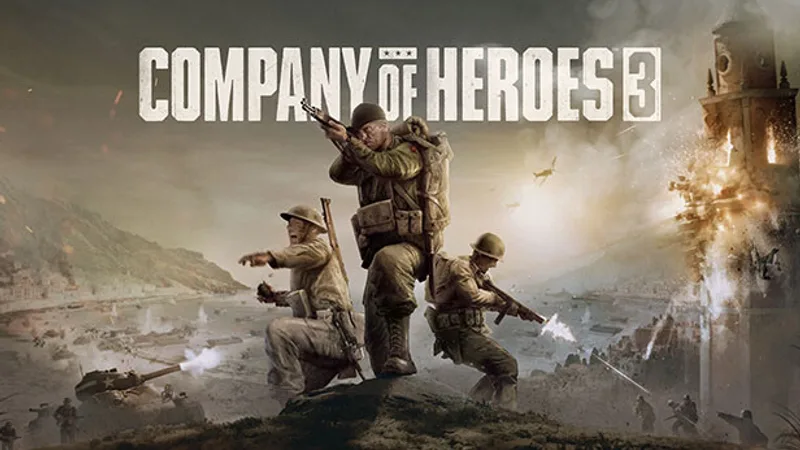
Company of Heroes 3 battle map with infantry in cover, armored vehicles and artillery smoke
rts

Company of Heroes 3: factions, campaign and tactical habits for 2026

A practical Company of Heroes 3 guide for 2026: which faction to pick, how to approach the Italian campaign, and how to stop losing squads for nothing.

· · Jul 2, 2026 · 7 min read

Company of Heroes 3 carries an odd burden. It is the return of a respected RTS name, but it is also a game whose campaign layer can feel less precise than its battles. In 2026, the healthiest way to approach it is to drop the nostalgia tax. The Italian map gives context, pace and useful pressure. The real heart of CoH3 is still somewhere smaller: ten seconds of squad control, a flank opening, an MG changing angle, a veteran unit retreating before it disappears forever.

This guide is not trying to sell Company of Heroes 3 as a perfect comeback. It is here to help you choose a faction, understand what the Italian campaign does well, and stop playing CoH3 like a mass-production RTS. In this series, losing a veteran squad can hurt more than losing a building.

What CoH3 still does well in 2026

Company of Heroes 3 is most convincing when it accepts its tactical scale. The maps are not as broad as a wargame, and the armies are not as huge as Total War, but every wall matters. A squad in the wrong street can melt in seconds. A squad in the right cover can hold an entire approach long enough for your mortar or light armor to change the fight.

Company of Heroes 3 infantry squads and vehicles fighting on a Mediterranean map

The Italian dynamic campaign adds a strategic wrapper, but it does not turn CoH3 into grand strategy. Read it instead as a generator of tactical situations: where to attack, which company to commit, which ability to use before a difficult battle. If you expect a campaign map with the depth of Total War, you may be disappointed. If you want your battles to have context, it does the job.

The useful question is therefore not “is the campaign deep enough?”. It is “does the campaign push me into interesting tactical fights?”. When the answer is yes, CoH3 still has bite.

Which faction should you start with?

The four factions do not just offer different unit lists. They teach different habits.

FactionGood fitHabit it teaches
US ForcesClean first campaignKeep initiative with flexible infantry and mobile support
British ForcesMethodical playersTurn defensive positions into offensive footholds
WehrmachtPatient playersBuy time until heavier tools arrive without losing the map
Deutsches AfrikakorpsMobile playStrike quickly, back out quickly, avoid static fights

For a first serious campaign, US Forces remain the clearest entry point. They forgive more mistakes, expose the basic cover system well, and let you learn vehicles without making the whole army depend on one fragile trick.

Company of Heroes 3 infantry in cover with light armor support

British Forces are better when you already enjoy building a strong position before pushing out. Wehrmacht rewards patience and punishment: you survive awkward early moments so later units can matter. Deutsches Afrikakorps is exciting, but it asks more from your movement and retreat timing.

Four habits that change most battles

The first habit is retreating early. Many new players wait until a squad is almost dead before pressing retreat. That is too late. A surviving squad keeps its veterancy, returns to the front and repays the time you invested in it. A dead squad is a debt.

The second habit is flanking. An MG42 locking a street should not be respected like a wall. It should be moved. Smoke it, go through a garden, force the pivot, then commit the squad that was not suppressed. CoH3 rewards geometry more than courage.

The third habit is combined arms. Infantry alone gets punished by armor. Armor alone gets stopped by anti-tank and loses map control. Even in single-player, keep at least a basic answer to each threat: infantry, suppression, indirect fire, anti-vehicle pressure and a way to scout.

The fourth habit is tempo. Capturing a fuel point is not a good deal if it costs two veteran squads. Sometimes the profitable move is to give up ground for three minutes, then return with smoke, mortar fire and a light vehicle when the enemy line is already stretched.

How to read the Italian campaign

The Italian campaign works best when you do not try to run everywhere. Secure a beachhead, keep companies close enough to support each other, and treat ports or airfields as structural objectives rather than checklist icons. The common mistake is opening too many fronts because the map invites it. CoH3 punishes scattered forces quickly.

Company of Heroes 3 tactical map with vehicles, smoke and combat positions

Your priorities should stay readable. Hold a simple supply line first. Improve a few companies instead of smoothing upgrades across everyone. Use strategic abilities before difficult battles, not after they go badly. Avoid automatic engagements when a manual battle can preserve veteran squads. Do not launch a major offensive without anti-armor options, even if the map appears open.

The campaign becomes more enjoyable when you stop treating it like a conquest puzzle and start treating it like a pressure system. Its job is to ask: which fight do you actually want to take?

Mods and multiplayer: keep the learning clean

The modding scene exists, but it does not have the long historical weight of Company of Heroes 2. For your first hundred hours, stay close to the vanilla game, perhaps with interface improvements or light fixes. Big realism mods can be interesting, but they also change timing, lethality and unit value. If you start with them, you may not know whether you are learning CoH3 or a rewritten ruleset.

For multiplayer, start with 1v1 or 2v2 before diving into 4v4 chaos. Large team games are spectacular, but they hide your mistakes. You can win without understanding why, or lose without identifying when the game turned. A 1v1 is harsher, but it teaches faster.

Quick diagnosis after a lost match

Use the replay like a tactical ledger. On the first pass, look only at squad wipes: Riflemen, Grenadiers, team weapons and light vehicles lost before they created value. On the second pass, follow fuel points and cutoff points. If your army was fighting near the wrong resource, the battle may have been lost before the first tank arrived.

Then check the support layer. A mortar that never forced an MG to move, an anti-tank gun facing the wrong road, or a scout unit arriving after the vehicle timing are all concrete signals. They matter more than blaming faction balance. CoH3 rewards players who can name the mistake: bad cover, late retreat, unsupported armor, no smoke, no reconnaissance, or a fuel point defended past its value.

Reading a defeat honestly

The right question after a loss is not only “which enemy unit was too strong?”. Ask which squad died for no reason, which point was defended too long, and which support weapon was never protected. CoH3 becomes clearer when you read a battle as a chain of small debts.

If you lose an infantry squad early, you also lose its future veterancy, its map presence and the chance to force a flank later. If you send out armor without scouting, you may hand the opponent a perfect anti-tank timing. If your mortars sit too far back, they never answer the MG at the moment it matters. These mistakes are not dramatic, but they explain many matches that slide away slowly.

A useful habit is to replay the minute before the disaster, not the last ten seconds. The battle was often already going wrong before the vehicle exploded or the point was lost. That is why CoH3 still works: it does not demand impossible speed, it demands that you recognize the fight you should refuse earlier.

Practical case: a squad can be worth more than fuel

Imagine two Riflemen contesting a fuel point. A German MG reveals itself, and a light vehicle is moving down the road. The impatient player stays, throws a grenade late and loses a squad. The stronger exchange is less heroic: retreat the suppressed unit, use smoke or mortar fire if available, then return with something that can force the MG to pivot.

That small decision explains why CoH3 remains interesting despite its uneven campaign. The game does not only reward taking territory. It rewards preserving veterans, rotating damaged squads and refusing fights where the opponent already prepared the ground.

Sources and media

This rewrite uses the official Company of Heroes site and the Steam page for Company of Heroes 3. The screenshots above are Steam media tied to steamAppId 1677280, matching the local game sheet.

Verdict

Company of Heroes 3 is not flawless, and that is exactly why it needs an honest guide. The campaign map can feel uneven, and some missions blur together. Its battles, however, still have that particular tension where one tiny decision changes everything.

Play it for what it does with clarity: tense, readable tactical command. If you learn to save veterans, flank support weapons and refuse bad engagements, CoH3 becomes more than a license returning. It becomes a very good RTS classroom.

For more World War II strategy, read our Hearts of Iron IV guide and our top PC strategy games 2026.

FAQ

  • Which Company of Heroes 3 faction should beginners pick?
    US Forces are the clearest starting point: flexible infantry, understandable tech choices and enough tools to learn cover, flanking and light vehicles.
  • Is the Italian campaign essential?
    It is useful for learning the game and giving battles context. The strongest part of Company of Heroes 3 remains the real-time tactical battle layer.
  • Is Company of Heroes 3 worth playing in 2026?
    Yes, if you want a readable, tense World War II tactical RTS. Just do not expect the campaign map to behave like a deep grand strategy game.
Simon Dougnac

Fondateur et rédacteur en chef d'After Strategy. Passionné de jeux vidéo de stratégie depuis plus de 15 ans, spécialisé dans les Grand Strategy (Paradox), les 4X et les RTS. Plus de 3000 heures cumulées sur les titres Paradox, Civilization et Total War.