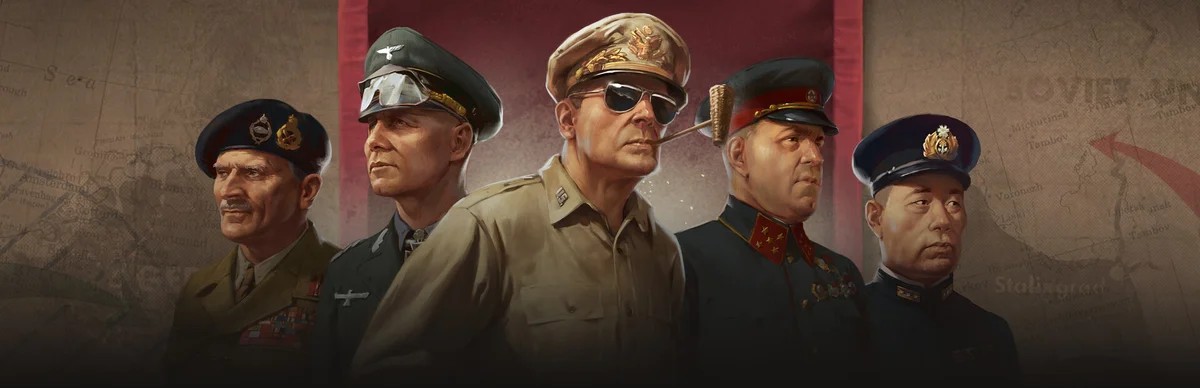
Released by Paradox Interactive in November 2024, Götterdämmerung is the most ambitious expansion ever published for Hearts of Iron IV on the German theatre. The DLC fully replaces the aging 2016 national tree with a massive focus tree built around three figures of the Nazi regime (Speer, Goering, Himmler), introduces new special units (He-162 jets, V-weapons) and opens up unapologetic alternate-history branches: prolonged war, separate peace, negotiated surrender. Here is the full 2026 guide to tackle it.
TL;DR:
- Price: €19.99 / $19.99 on Steam — major DLC, not a Focus Pack
- Content: complete new German focus tree, Speer/Goering/Himmler branches, jets and V-weapons, alt-history endings
- Verdict: essential for anyone playing the Axis seriously, an overhaul long overdue (8 years)
- Target audience: Germany players, WW2 alt-history fans, Paradox completionists
- Prerequisites: HOI4 base game; Man the Guns + No Step Back + La Résistance strongly recommended
Table of contents

- Götterdämmerung: what does it actually add?
- The new German focus tree: branches and critical choices
- Early game Germany strategy with Götterdämmerung (1936-1939)
- Mid game: Barbarossa and alternatives
- End game: alternate endings (Welteroberung, separate peace, etc.)
- Is Götterdämmerung worth its price? Verdict
- Going further
Götterdämmerung: what does it actually add?

Before diving into strategy, let’s lay out the content. Götterdämmerung delivers five distinct blocks:
- Full overhaul of the German focus tree: the 2016 tree is gone, replaced by a tree four times as large with three internal power branches.
- Three-way internal Balance of Power within the regime: Speer (technocratic productivist), Goering (Luftwaffe + classic war economy), Himmler (SS + ethnic collaboration).
- New special units: He-162 Volksjäger and Me-262 jet fighters, V-weapons (V-1, V-2) tied to a reworked strategic bombing system.
- Alt-history branches without compromise: Welteroberung (prolonged total war), separate peace in the West, internal collapse scenario, negotiated end.
- New interactions with Italy, Hungary, Romania and occupied territories through a deeper collaboration / resistance system (synergy with La Résistance).
On the quality-of-life side, the DLC also adds new leader portraits, two new music tracks, and reworks scripted historical events through 1948 — previously, post-1945 timelines used to dry up sharply.
The new German focus tree: branches and critical choices

The tree revolves around a three-pole Balance of Power. Each military, economic or political focus tilts the internal balance between Speer, Goering and Himmler. Tilting too far too early locks branches, unlocks powerful bonuses but also penalties.
Speer branch (technocratic)
- Specialties: war industry, heavy mechanisation, jets (He-162, Me-262), V-weapons, late planned economy
- Key bonuses: +25% military factory efficiency, accelerated jet access, V-weapons available from 1944
- Best for: long campaigns with sustained attrition, players who love industrial optimisation
- Weakness: few diplomatic bonuses, heavily dependent on a long war
Goering branch (Luftwaffe + classic economy)
- Specialties: air doctrine, heavy fighters, aluminium/rubber output, strategic raids
- Key bonuses: -20% air production time, Operational Integrity doctrine unlocked early, improved air resupply
- Best for: players who want to dominate European skies before the ground war
- Weakness: slow pre-war economy, vulnerable if the Luftwaffe loses air superiority
Himmler branch (SS + collaboration)
- Specialties: occupation, collaboration / pacification, Waffen-SS divisions, internal espionage
- Key bonuses: -50% resistance in occupied territories, SS divisions with superior stats, integration of puppet states
- Best for: massive conquest runs (Welteroberung) where occupation becomes the real challenge
- Weakness: stability penalties, revolt escalation if overextended, poor diplomatic reputation
The classic trap: trying to grab everything. Pick a dominant branch before 1939 — the tree punishes indecision through an internal coherence penalty (-15% political power).
Early game Germany strategy with Götterdämmerung (1936-1939)
The first three years’ goals haven’t changed: rearm, annex Austria + Sudetenland + Czechoslovakia, prepare Poland. Götterdämmerung changes how you get there.
January 1936 — first critical choice: Rhineland first (still mandatory), then immediately commit to one of the three branches. New twist: picking the Vier-Jahresplan or Speer Memorandum focus as early as 1936 sends a strong signal in the internal BoP.
Practical tips:
- Build 5-6 civilian factories per month until 1937, then switch to military factories
- Keep Mobile Warfare as your land doctrine (the new Goering branch makes Operational Integrity tempting but don’t make it your only doctrine)
- Anschluss + Sudetenland: automatic with the right focuses — no need to plan a war
- Czechoslovakia 1938: Götterdämmerung interacts here with Peace for Our Time (April 2026 Czech DLC). If you own both, the Czech AI may resist militarily — prepare 80+ divisions instead of the usual walkover
💡 Tip: if you target the Speer branch, unlock the Industrial Concentration focus before 1939. It accelerates civilian-to-military factory conversion by 30% for 6 months — a decisive boost before Poland.
Poland (September 1939): the war itself doesn’t change, but Götterdämmerung lets you choose how to occupy Poland. Himmler branch → Generalplan Ost (maximised extraction yield, strong resistance). Speer/Goering branches → classic military administration (medium yield, manageable resistance).
Mid game: Barbarossa and alternatives
This is where Götterdämmerung changes the most. The tree pushes you to choose when and how to attack the USSR — or even whether to attack at all.
Option 1 — Historical Barbarossa (June 1941) Doable, recommended for a first run. The DLC adds dedicated Operation Barbarossa focuses that unlock up to 12 pre-positioned Panzer divisions and an organisation boost for 90 days. Combined with No Step Back, this remains the most stable path.
Option 2 — Delayed Barbarossa (1942 or 1943) Götterdämmerung truly opens this path. You stay at peace with the USSR, finish the United Kingdom first (via Sealion or negotiated peace — see Goering branch), then attack Stalin with a mature war economy and the first operational jets. Risky: Stalin also has time to rearm.
Option 3 — No Barbarossa Late Himmler branch or “façade-pacifist” Speer. You focus on the Atlantic, Africa, Middle East. Possible but fragile: the USSR usually declares war around 1944-1945 unless you trigger an explicit separate peace scenario (rare).
Eastern Front, key tips:
- Never overextend attrition: AI Wehrmacht consumes equipment faster than you can produce it. Mass-produce self-propelled artillery
- V-weapons: available via Speer from 1944. Strikes on London and Moscow — psychological effect modelled by an enemy stability penalty
- He-162 jets: mass production is feasible (the Volksjäger was designed for it). They don’t replace pilots, but they saturate the skies against P-51s and Spitfires
End game: alternate endings (Welteroberung, separate peace, etc.)
Götterdämmerung introduces four major endings post-1944 that the old tree didn’t offer. They aren’t mutually exclusive in mid-game — your final BoP determines what stays accessible.
Welteroberung (world conquest) Dominant Himmler branch + 80%+ of Eurasia under control. The Welteroberung decision unlocks a final wave of focuses (long occupation, protectorate integration, ultimate pacification). Long, demanding, but the most “alt-history fantasy” ending in the DLC.
Separate peace in the West Dominant Goering or Speer branch + air superiority over the Channel + at least one serious Soviet setback. You open a diplomatic channel with London. If Churchill holds, it fails — but in certain scripted scenarios (Halifax as PM, British naval defeat in the Atlantic), it succeeds. You keep Western Europe, lose the colonies, and keep fighting in the East alone.
Internal collapse (the “realistic” ending) Triggerable even unwillingly: if your BoP becomes incoherent and you lose a Stalingrad-equivalent battle, Himmler or Goering may attempt a coup. Civil unravelling, territorial fragmentation, early end. Not fun to play but historically interesting.
Negotiated 1945 surrender The “realistic-lite” ending. You’ve lost on every front, but Götterdämmerung allows a negotiated surrender rather than unconditional one if Speer dominates the BoP at the end (he historically preserved part of German industry). You keep 1937 borders, lose all alt-history focuses. Short but clean path.
Is Götterdämmerung worth its price? Verdict
Yes — without hesitation for anyone playing Germany. At €19.99, this is a major DLC (on par with No Step Back or Man the Guns), and the content delivers:
- A tree overhaul long awaited since 2016, finally shipped with real ambition
- Three internal branches with high replayability (each deserves 2-3 campaigns)
- Four major endings that genuinely change the conclusion
- Compatibility now stabilised with other major DLCs (successive patches since November 2024)
Honest critiques:
- The Goering branch is less fleshed out than the other two — Paradox acknowledged a rebalancing patch is in the works for mid-2026
- Some AI interactions (notably USSR pre-1941) can bug out with poorly updated cosmetic mods
- The €19.99 price remains high for a DLC that only touches one nation — the main community complaint
For players who never touch Germany and stick with minor nations (Yugoslavia, Peru, Mexico), Götterdämmerung is conversely skippable. Prefer Peace for Our Time (Czechoslovakia) or regional Focus Packs, more relevant to those playstyles.
Going further
To explore every angle of HOI4 in 2026, start with our Hearts of Iron 4 hub which centralises all the documentation. On the complementary DLC side, the HOI4 main DLC guide remains the best roadmap to prioritise your purchases. Alt-history fans will find their fix in our top 10 best HOI4 mods 2026 (Kaiserreich, TNO, Old World Blues all updated for Götterdämmerung). To celebrate the game’s decade, see also our HOI4 10-year retrospective. And if Czechoslovakia intrigues you, the Peace for Our Time review is the perfect companion — the two DLCs answer each other beautifully.
FAQ
Is Götterdämmerung essential for playing Germany in HOI4?
Yes — it is currently the most important DLC for anyone serious about playing Germany. It replaces the aging 2016 national tree with a massive focus tree built around the Speer, Goering and Himmler branches, special units (jets, V-weapons) and genuine alternate endings. Without it, Germany remains playable but frustrating.Do you need other HOI4 DLCs before buying Götterdämmerung?
Not strictly required, but strongly recommended. Man the Guns, La Résistance and No Step Back are the three natural companions — they enrich naval diplomacy, resistance/collaboration and the Eastern Front, which are the central theatres of any Reich campaign. Götterdämmerung works alone, but it shines paired with these three.Which country benefits the most from the Götterdämmerung DLC?
Germany first, no surprise. But Axis satellite nations indirectly benefit through the new collaboration mechanics and tech-sharing systems (jets and V-weapons can be exported). Italy, Hungary and Romania become more interesting thanks to the reworked diplomatic interactions.Is Götterdämmerung compatible with the major HOI4 mods?
Yes for most cosmetic and gameplay mods. For total conversion mods (Kaiserreich, The New Order, TNO, Old World Blues), compatibility depends on each modding team — Götterdämmerung forced major rewrites, and most are up to date as of early 2026. Always check the Steam Workshop entry before launching.
- #Hearts Of Iron Iv
- #HOI4
- Gotterdammerung
- #Paradox Interactive
- #DLC
- #Edition 2026