
Europa Universalis 4: “Design docs kill creativity, we end up with idea guys and implementers”
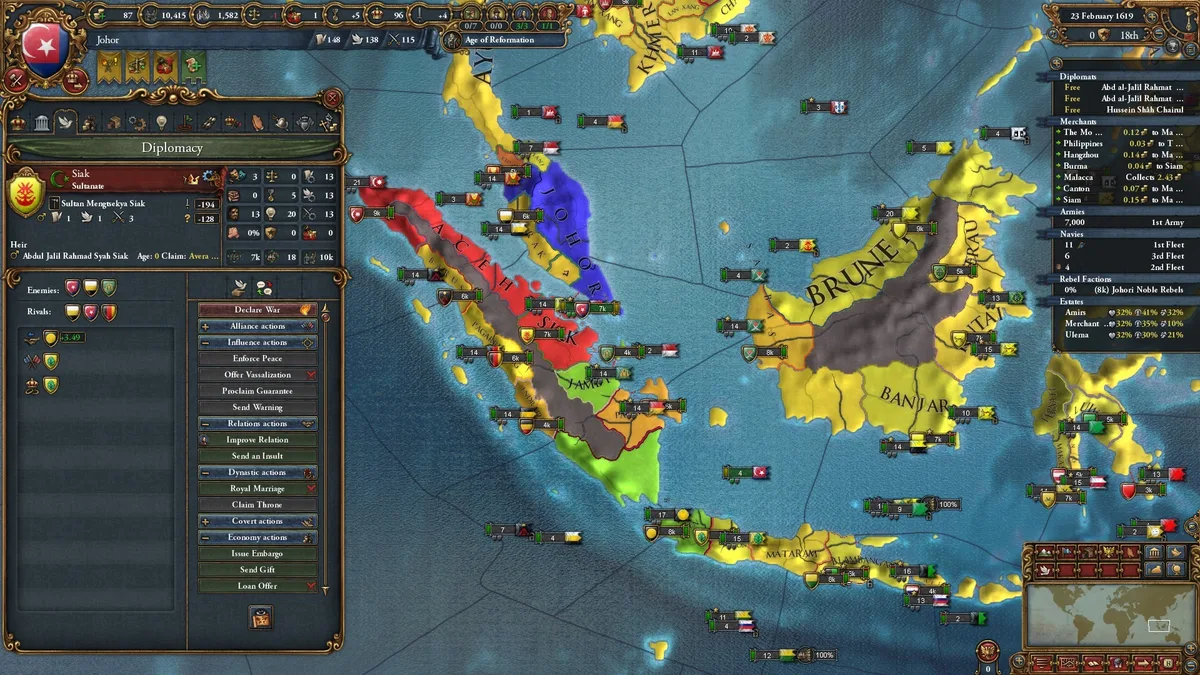
- Johan Andersson, lead designer on Europa Universalis at Paradox Tinto, told PC Gamer that design documents stifle creativity.
- His quote: teams end up with “idea guys” who write the documents and implementers who merely follow them.
- Andersson says Paradox favors a bit of democracy in design, with developers who are also passionate players.
- Announced on May 8, 2025 and released on November 4, 2025, Europa Universalis V is already out when this interview lands.
- The article argues for lighter design documents and room to experiment, like the emergent mechanics of Europa Universalis IV and Crusader Kings III.
In this article
- A confession that is making noise in the strategy world
- The “design by PowerPoint” syndrome
- Creativity is like a game of EU: it is played on instinct
- Implementers vs. “idea guys”: a sterile war
- How do we save creativity?
- The future of Europa Universalis (and strategy games) requires more freedom
A confession that is making noise in the strategy world
When the lead designer of Europa Universalis drops a line like “design documents stifle creativity,” it lands hard. Not only because it is a cult game that shaped generations of armchair strategists, but because it touches a wider problem: modern game development, where paperwork takes over from fun.
Estimated reading time: 6 minutes
You end up with “idea guys” churning out documents endlessly on one side, and implementers on the other, following them blindly without a say. The result, Johan Andersson argues, is games that lack soul. What matters is that spark that makes you come back to Europa Universalis IV ten years later.
The “design by PowerPoint” syndrome
The problem is that big studios (and even small ones, by mimicry) have adopted an ultra-structured approach to game design. Everything must be planned, validated, reviewed, and approved before a single line of code is written. On paper, that makes sense: no budget overruns, a framed vision, everyone on the same page. In practice, though, it produces games that reek of the validation committee, Europa Universalis IV included.
Take Europa Universalis IV, a game loved for its depth and its emergence of unique stories. Did its best moments come out of a hyper-detailed design document? No. They came from mechanics that were hacked, tested, and reworked on the fly by developers who had the freedom to experiment. You end up with “safe,” predictable features, built to please the widest audience without surprising anyone — for players, that predictability is the real issue.
Creativity is like a game of EU: it is played on instinct
Playing Europa Universalis is a bit like running an empire: you can have a plan, but it is improvisation and poker moves that win the great victories. A good game designer is the same. They need to test, break, and start over without justifying every comma to a project manager who has never touched a game engine. If you want creativity, that constraint has to go.
The problem is that design documents become a kind of untouchable Bible. The answer is “no, it is not in the scope” as soon as someone proposes an idea that is not in the document. That reflex, Johan Andersson’s team at Paradox Tinto used to lean on more, he told PC Gamer. Except the best ideas, the ones that make the difference, rarely come from the initial scope.
Take Crusader Kings III. Nobody had planned that the game would become a meme factory thanks to its trait and event system. It is by letting developers play with the mechanics, by giving them freedom, that the game took on this unique dimension. If you play grand strategy, that emergent storytelling is what keeps you coming back.
Implementers vs. “idea guys”: a sterile war
The worst part of this story is the toxic dynamic it creates inside studios like Paradox Tinto. On one side, the “idea guys” (often leads or senior designers) spend their time writing documents and sitting in meetings. On the other, the implementers (the developers, the artists) who have to apply them without a word.
Except the implementers are often the ones who know the tools, the technical constraints, and the little details that make a mechanic fun or not. Silencing them is like playing Europa Universalis with random events disabled: you gain control, but you lose everything that makes the game alive.
And let’s be honest: the “idea guys” are not always the most competent. Sometimes they just know how to sell ideas in meetings, not what makes a game like Europa Universalis IV addictive. For players, the risk is polished but soulless products.
How do we save creativity?
So, should we throw out all the design documents and go into “we’ll see” mode? No. But for a studio like Paradox Tinto, a balance has to be found.
- Light documents, not novels — A good design document is like a good law in Europa Universalis: a framework, not a straitjacket. One page for the intent, the broad strokes — then you test, iterate, adjust.
- Let developers play with the game — The best feedback comes from those who tinker with the game every day. At Paradox Tinto, developers are also passionate players: they test, they break, they improve live.
- Accept that some ideas come from chaos — The most iconic mechanics (the diplomacy system of Europa Universalis, the intrigues of Crusader Kings) did not come fully formed out of a brainstorming session. They emerged along the way, because room was left for experimentation.
- Avoid stifling hierarchies — If only a small group has the right to propose ideas, you miss out on 90% of your team’s creative potential. In the best studios, a junior can pitch a wild idea and be heard — in practice, that is what separates the memorable from the forgettable.
The future of Europa Universalis (and strategy games) requires more freedom
The sequel, Europa Universalis V, launched on November 4, 2025, and the question is obvious: did Paradox learn the lessons? Will they avoid the “design by PowerPoint” trap? Players do not want an EU5 that reeks of acute meetingitis. They want a game where every session is a new adventure, where mechanics surprise, where anything feels possible.
For that, developers need the freedom to break the rules. Not only those who write the documents, but those who apply them. Because in the end, a good strategy game, like a good empire, is built with a mix of planning and audacity — what matters is trusting the team to innovate. If Paradox Tinto wants to keep its crown, it must remember this: the best games do not come out of a spreadsheet.
They come from collective intelligence, flashes of genius, and a team trusted to innovate. Design documents still have their use, even in a series as deep as Europa Universalis. But let them take control, and you end up with games as exciting as a quarterly report — a fate worse than a bad patch for players.
See also
- Europa Universalis: Paradox owns up to its DLC model
- Europa Universalis: 25 years of strategy, DLC and grey hair
- Europa Universalis IV cheat codes: useful console commands in 2026
- All grand strategy games
- Viking Rise x Dragons: the Vikings and Dragons collaboration
Sources
Sources
- pcgamer.com /games/strategy/europa-universalis-lead-says-design-documen…
- wardrome.com /europa-universalis-lead-critiques-design-documents/
- en.wikipedia.org /wiki/Europa_Universalis_V
- en.wikipedia.org /wiki/Johan_Andersson_(game_developer)
- store.steampowered.com /app/236850/Europa_Universalis_IV/
- paradoxinteractive.com /games/europa-universalis-iv