Watch the official trailer:
Introduction to Homeworld 3: The Return of the Space RTS King
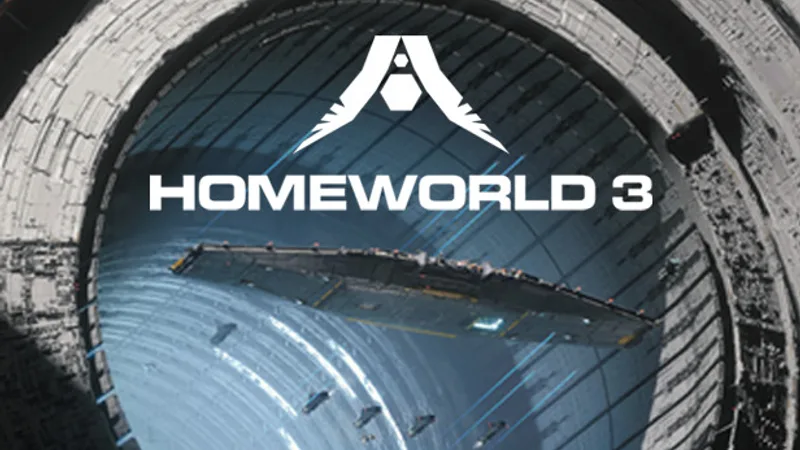
Homeworld 3, developed by Blackbird Interactive and published by Gearbox Publishing, launched in May 2024 as one of the most anticipated real-time strategy games of the decade. The original Homeworld (1999) essentially created the 3D space RTS genre, and after twenty years, the trilogy finally received its conclusion. For fans of strategy games — and RTS in particular — Homeworld 3 offers something genuinely unique: fully three-dimensional fleet combat set against breathtaking space vistas.
If you’re looking for how this fits into the broader RTS landscape, check out our best PC strategy games 2026 ranking for context on where Homeworld 3 stands.
Unlike most RTS games where you build bases and harvest resources on a flat plane, Homeworld 3 puts you in command of a fleet navigating the vast emptiness — and the massive ancient megaliths — of deep space. Ships move in all three dimensions, and the tactical implications of this simple fact make Homeworld 3 feel unlike anything else in the genre.
This guide covers everything you need to know to master Homeworld 3 in 2026, from the campaign and factions to fleet strategies, War Games, and the emerging mod scene.

The Story So Far: Factions and Lore
The Hiigaran Fleet
The Hiigarans are the returning protagonists of the series. Their story spans millennia — exiled from their homeworld, they fought across the galaxy to reclaim it in the original Homeworld, then defended it in Homeworld 2. In Homeworld 3, the Hiigarans face a new existential threat as the Hyperspace Gate Network that connects the galaxy begins to collapse.
You play as Imogen S’jet, the new Fleet Command, who must guide the Hiigaran mothership Khar-Kushan through increasingly dangerous space to uncover the cause of the network’s failure. The Hiigaran fleet features a well-rounded unit roster:
| Ship Class | Key Units | Role |
|---|---|---|
| Fighters | Interceptor, Bomber | Anti-strike craft, anti-capital |
| Corvettes | Gunship, Pulsar Corvette | Flexible fire support |
| Frigates | Ion Frigate, Torpedo Frigate, Assault Frigate | Core fleet backbone |
| Capital Ships | Destroyer, Battlecruiser, Carrier | Heavy firepower and production |
| Utility | Resource Collector, Resource Controller, Probe | Economy and recon |
The Incarnate
The primary antagonists of Homeworld 3 are the Incarnate — a mysterious and fanatical faction that worships the megaliths and seeks to control the Hyperspace Gate Network. The Incarnate use corrupted Progenitor technology, giving their ships a distinct aesthetic that contrasts sharply with the Hiigaran fleet’s clean industrial lines.
In gameplay terms, the Incarnate serve as the campaign’s AI-controlled enemy. Their ships tend to be aggressive and numerous, often relying on swarm tactics with fast strike craft before bringing in heavier vessels. Learning to counter Incarnate attack patterns is essential for completing the campaign on harder difficulties.
The Progenitor Legacy
The Progenitors are the ancient civilization that built the Hyperspace Gate Network and the massive megaliths scattered throughout space. While they don’t appear as a playable faction, their technology and ruins are central to both the story and gameplay. Megaliths serve as terrain features that provide cover and create chokepoints — a revolutionary addition to the Homeworld formula.
Core Gameplay Mechanics
3D Movement and the Sensor Manager
The most distinctive feature of Homeworld 3 is full 3D movement. Ships can be ordered to move not just across a flat plane, but up, down, and at any angle in space. This is controlled through two interfaces:
The Tactical View is your default perspective. You can rotate the camera freely and issue move orders. To adjust vertical positioning, hold the relevant modifier key and drag — your ships will move up or down relative to the movement plane.
The Sensor Manager (default key: Space) zooms out to show the entire map as a strategic overview. This is essential for tracking enemy movements, identifying resource locations, and coordinating large-scale fleet actions. Good Homeworld players toggle between these views constantly.
Cover and Terrain
Homeworld 3 introduces physical cover to space combat for the first time in the series. The massive Progenitor megaliths that dot each map create walls, tunnels, canyons, and enclosed spaces. This has profound tactical implications:
- Line of sight matters. A frigate behind a megalith wall cannot be hit by weapons that require direct line of sight.
- Fighters can exploit geometry. Small ships can fly through tunnels and narrow gaps that capital ships cannot follow through.
- Ambush positions exist. You can hide fleet elements behind cover and spring them on unsuspecting enemies.
- Missiles and some weapons can curve around obstacles, making them more valuable in cover-heavy maps.
This system transforms Homeworld from a pure open-space engagement game into something with almost terrain-based tactical depth, similar to how ground-based RTS games use hills and forests.
The Resource Economy
Homeworld 3 uses a straightforward resource model. Resource patches are scattered around each map, and you send Resource Collectors to harvest them. Resources are finite — once a patch is depleted, it’s gone. This creates natural pressure to expand and control the map.
Key economic principles:
- Early collector count matters. Get 4-6 collectors working as soon as possible.
- Resource Controllers act as mobile dropoff points. Place them near distant patches to dramatically reduce collector travel time.
- Protect your collectors. Losing them early can cripple your economy for the entire mission.
- In multiplayer, resource denial (destroying enemy collectors or controlling patches) is a viable strategy.
Fleet Persistence
One of Homeworld’s signature features, carried over into Homeworld 3, is fleet persistence in the campaign. The ships you end a mission with carry over to the next. This means:
- Preserving your fleet matters. Losing a Battlecruiser in Mission 5 means you don’t have it for Mission 6.
- Building up a powerful fleet across the campaign creates a satisfying sense of progression.
- On harder difficulties, fleet preservation becomes a major strategic consideration — sometimes it’s better to retreat and save ships than to win a pyrrhic victory.
Campaign Walkthrough: Tips and Strategies
The Homeworld 3 campaign consists of 13 missions that take the Khar-Kushan from the relative safety of Hiigaran space into the collapsing gate network and beyond. Here are key strategies for each phase of the campaign.
Early Campaign (Missions 1-4): Building Your Foundation
The opening missions teach you the basics while establishing the story. Focus on:
- Learning movement controls thoroughly. Spend time in Mission 1 getting comfortable with 3D orders.
- Building a balanced fleet. Don’t over-invest in any single ship type. Aim for a mix of fighters, corvettes, and frigates.
- Exploring every corner of the map. Early missions often have bonus resources or salvageable ships hidden in nooks of the megaliths.
Mid Campaign (Missions 5-9): Escalation
Difficulty ramps up significantly in the middle act. The Incarnate start fielding heavier units and larger fleets. Key advice:
- Ion Frigates become essential. Their anti-capital damage is necessary to deal with enemy frigates and destroyers efficiently.
- Use terrain aggressively. Position your fleet behind cover whenever possible. Let enemies come to you rather than charging into open space.
- Start building Destroyers as soon as they become available. They’re expensive but durable and pack serious firepower.
Late Campaign (Missions 10-13): The Finale
The final missions are the most challenging, with massive enemy fleets and complex objectives. Tips:
- Carriers are invaluable for forward production and repair. Keep at least one with your main fleet.
- Battlecruisers are worth the investment in the late game. Their firepower can turn the tide of large engagements.
- Micro your fighters. In big battles, it’s easy to forget about strike craft. Keep Interceptors screening your capital ships and Bombers focused on priority targets.
- Save frequently. Late campaign missions can be long and punishing.
War Games Mode: Roguelike Fleet Combat
War Games is Homeworld 3’s standout addition to the franchise — a cooperative PvE mode for 1-3 players that combines roguelike elements with classic Homeworld fleet combat.
How War Games Works
Each War Games run consists of a series of encounters across procedurally arranged maps. Between encounters, you choose from randomly offered artifacts — modifiers that buff your fleet in various ways. Some artifacts boost specific ship types, others improve resource gathering, and rare ones can dramatically alter your playstyle.
The difficulty escalates with each encounter, and your fleet carries over between them (just like the campaign). The goal is to survive as many encounters as possible while building the most powerful fleet you can.
War Games Strategies
Specialization vs. Flexibility: Some artifact combinations reward specializing in a single ship type (like an all-fighter build or an all-frigate build). Others reward a balanced approach. Pay attention to what artifacts are offered and be willing to pivot your strategy.
Economy artifacts are underrated. Anything that improves resource collection or reduces ship costs pays dividends across an entire run. Prioritize these early.
Communication in co-op is crucial. In 3-player runs, coordinate who builds what. Having one player focus on strike craft, another on frigates, and a third on capitals creates a devastating combined fleet.
Learn the encounter types. While maps are procedurally arranged, the encounter types are fixed. Some require defense, others are all-out assault, and some have special objectives. Knowing what to expect helps you prepare the right fleet composition.
Multiplayer Strategies
Competitive Multiplayer Overview
Homeworld 3’s competitive multiplayer supports 1v1 and 2v2 matches. The meta in 2026 has settled into recognizable patterns, though balance patches continue to adjust things.
Opening Builds
Fighter Rush: Build Interceptors immediately and harass enemy collectors. This is aggressive and risky but can cripple an unprepared opponent’s economy. Follow up with Corvettes if the rush doesn’t end the game.
Fast Frigate: Skip heavy fighter investment and rush to Frigate-class production. Ion Frigates are extremely powerful in the early-mid game when opponents lack capital ship counters. Vulnerable to fighter harassment in the early game.
Balanced Expand: Build a small fighter screen, expand to a second resource patch quickly, and tech up. This is the safest opening but can lose to aggressive rushes if you don’t scout.
Map Control and Scouting
Use Probes liberally. They’re cheap and provide vision across the map. Knowing where your opponent’s fleet is positioned — and what they’re building — is half the battle. Control resource patches by keeping a small garrison near them to deter collector raids.
Advanced Tactics
Focus fire is critical in multiplayer. Concentrating your fleet’s firepower on one enemy ship at a time is far more effective than spreading damage. Use control groups and attack-move orders aggressively.
Vertical flanking is devastatingly effective. While your opponent’s fleet faces your main force, send a group of Bombers above or below the engagement to attack from an unexpected angle. Most players focus on the horizontal plane.
Retreat and repair. Damaged ships that survive can be repaired by Carriers or Resource Controllers. A fleet that retreats, repairs, and re-engages will beat a fleet that fights to the death every time.
Fleet Composition Guide
Understanding unit roles and how they interact is the foundation of Homeworld 3 mastery. Here is a detailed breakdown.
Strike Craft (Fighters and Corvettes)
| Unit | Strengths | Weaknesses | Best Used Against |
|---|---|---|---|
| Interceptor | Fast, cheap, good vs. strike craft | Low HP, weak vs. frigates | Enemy fighters, bombers, probes |
| Bomber | High anti-capital damage | Slow, fragile, useless vs. fighters | Frigates, destroyers, carriers |
| Gunship Corvette | Durable, flexible damage | Jack-of-all-trades, master of none | Mixed enemy compositions |
| Pulsar Corvette | Area-of-effect damage | Expensive for a corvette | Groups of strike craft |
Frigates
Frigates are the workhorses of any Homeworld 3 fleet. They’re durable enough to anchor a formation and deal enough damage to threaten anything.
- Ion Frigates deal tremendous single-target damage with their ion beams. They are the primary anti-capital answer in the mid-game. Keep them behind cover and let them fire from protected positions.
- Torpedo Frigates fire volleys of guided torpedoes that deal burst damage. Excellent for alpha strikes — the first salvo can cripple or destroy a frigate before it can respond.
- Assault Frigates are generalists with rapid-fire weapons effective against both strike craft and other frigates. Good for filling out your fleet when you need flexible response capability.
Capital Ships
- Destroyers are the smallest capital ships. They’re tough, well-armed, and significantly cheaper than Battlecruisers. A pair of Destroyers can anchor a fleet effectively.
- Battlecruisers are the ultimate combat ships. Massively expensive but enormously powerful, a single Battlecruiser can turn the tide of an engagement. Protect them at all costs — losing one is a devastating economic blow.
- Carriers don’t fight but provide mobile production facilities and repair capabilities. They also serve as rally points for newly produced ships. Having at least one Carrier with your main fleet is almost always correct.
Modding Scene in 2026
The Homeworld series has one of the most legendary modding communities in RTS history. Homeworld 2’s modding scene produced total conversions that rivaled commercial games — the Star Wars Warlords mod, the Battlestar Galactica mod, and Complex were all beloved by the community.
Homeworld 3’s modding scene is still maturing, but promising projects are underway:
- Balance and QoL mods that tweak unit stats, improve the UI, and adjust difficulty are readily available on Steam Workshop.
- Custom War Games scenarios created by the community add new encounter types and artifact pools.
- Ship reskin packs bring visual variety, with popular packs inspired by sci-fi franchises.
- Total conversion projects are in development, though none have reached full release as of early 2026. The most anticipated ones aim to bring classic sci-fi universes into Homeworld 3’s engine.
If you’re interested in how modding enriches other strategy games, check our guide on Stellaris best mods 2026 for an example of what a thriving mod community can produce.
Performance and Settings Tips
Homeworld 3 is visually stunning but can be demanding on hardware, especially in large fleet battles with particle effects. Recommended optimizations:
- Shadows and volumetric lighting are the biggest performance hogs. Reducing these from Ultra to High yields significant FPS gains with minimal visual impact.
- Anti-aliasing: TAA provides the best balance of quality and performance. MSAA at 4x looks slightly sharper but costs more frames.
- Resolution scaling can help if you’re GPU-bound. Setting it to 85-90% is barely noticeable but frees up resources.
- Large fleet battles in late-game War Games runs can stress even high-end systems. Consider lowering particle density if you experience frame drops during big engagements.
Homeworld 3 vs. Other Space RTS Games
How does Homeworld 3 compare to its competitors?
| Feature | Homeworld 3 | Sins of a Solar Empire 2 | Stellaris |
|---|---|---|---|
| Combat Dimension | Full 3D | 2D plane in 3D space | Automated fleet combat |
| Base Building | None (fleet only) | Orbital structures | Full empire management |
| Scale | Tactical (dozens of ships) | Strategic (hundreds) | Grand strategy (thousands) |
| Multiplayer | 1v1, 2v2, co-op War Games | Up to 10 players | Up to 32 players |
| Learning Curve | Moderate | Moderate-High | High |
| Focus | Tactical fleet micro | Empire + fleet management | Empire building + diplomacy |
Homeworld 3 occupies a unique niche — it’s the only major RTS that offers true 3D tactical fleet combat without base building. If you want to feel like a fleet admiral making moment-to-moment tactical decisions, nothing else comes close.
Tips for Returning Homeworld Veterans
If you played Homeworld 1 or 2 and are returning for the third entry, here are key differences to keep in mind:
- Cover changes everything. The megalith terrain system means positioning matters far more than in previous games. You can’t just ball up your fleet in open space and attack-move anymore.
- Strike craft are more fragile relative to frigates and capitals compared to earlier games. Don’t over-invest in fighters for direct combat — they’re best used for screening and harassment.
- The campaign is shorter than Homeworld 2’s. Some veterans found it disappointing at launch, but post-launch updates have improved pacing and added content.
- War Games is the real endgame. Many veteran players spend most of their time in War Games after completing the campaign. Its roguelike structure provides far more replayability than the linear campaign.
Conclusion
Homeworld 3 is a remarkable achievement in the RTS genre — a game that delivers tactical depth, visual spectacle, and emotional storytelling in a package unlike anything else on the market. The addition of cover mechanics and the War Games mode give it legs that extend far beyond the campaign, and the growing modding community promises even more content in the years to come.
Whether you’re a returning veteran or a complete newcomer to the series, 2026 is an excellent time to jump in. The game has been polished through multiple updates, the community is active, and the War Games mode offers near-infinite replayability.
For more RTS recommendations, don’t miss our guide to Company of Heroes 3 — another excellent modern RTS — and our comprehensive best PC strategy games 2026 ranking.
Welcome to the fleet, Commander. The galaxy needs you.
- Homeworld
- Homeworld 3
- Blackbird Interactive
- Gearbox
- Space Rts