Table of contents
Star Wars Zero Company came out on August 27, 2026 on PC, PS5 and Xbox Series X|S. Two months on, the question is no longer whether to pre-order. It is whether the game is worth its price today. The answer depends on the player more than the game. Bit Reactor’s tactics title offers a finite campaign of 30 to 40 hours with no New Game Plus at launch, and it does not appeal in the same way to an XCOM veteran and to a curious Star Wars fan.
This analysis relies on EA’s announcements, the store pages, the official patch notes and the specialist press. After Strategy has not played the game, so no gameplay verdict is offered here, only sourced facts and what they mean for a buyer.
Price and editions: one real question
EA lists the Standard Edition at $49.99 on PC and $59.99 on PS5 and Xbox Series X|S. On Steam, the store page shows 49.99 euros for the Standard Edition and 59.99 euros for the Deluxe Edition, with a 10 euro Deluxe upgrade. The Deluxe adds two cosmetic packs and five weapon themes inspired by the Clone Wars. No gameplay content comes with them.
The choice is therefore simple. Unless the cosmetics appeal, the Standard Edition gives access to the whole game. Nothing in the sources points to paid extra content or an expansion announced so far. The real issue is not which edition to pick but whether a 30 to 40 hour campaign matches the way you play. The difference between the two tiers is ten euros of cosmetics, while the difference between a good and a poor fit is the next forty hours.
What the price buys: a finished campaign
Bit Reactor estimates the campaign at 30 to 40 hours, depending on difficulty and the player’s familiarity with the genre. The studio describes a linear story where some moments vary with the squad members you bring, and both PC Gamer and TechRadar report no New Game Plus at launch. The word “launch” matters: nothing is promised afterwards.
For a tactics fan, that is a respectable length. It is less generous than a modded XCOM 2, but consistent with a character-driven narrative game. Replayability rests on squad composition, permadeath and, since October 15, the new campaign modifiers. If you want a base to replay for hundreds of hours, this is not it. The risk for that profile is finishing the story once, enjoying it, and then having little reason to return.
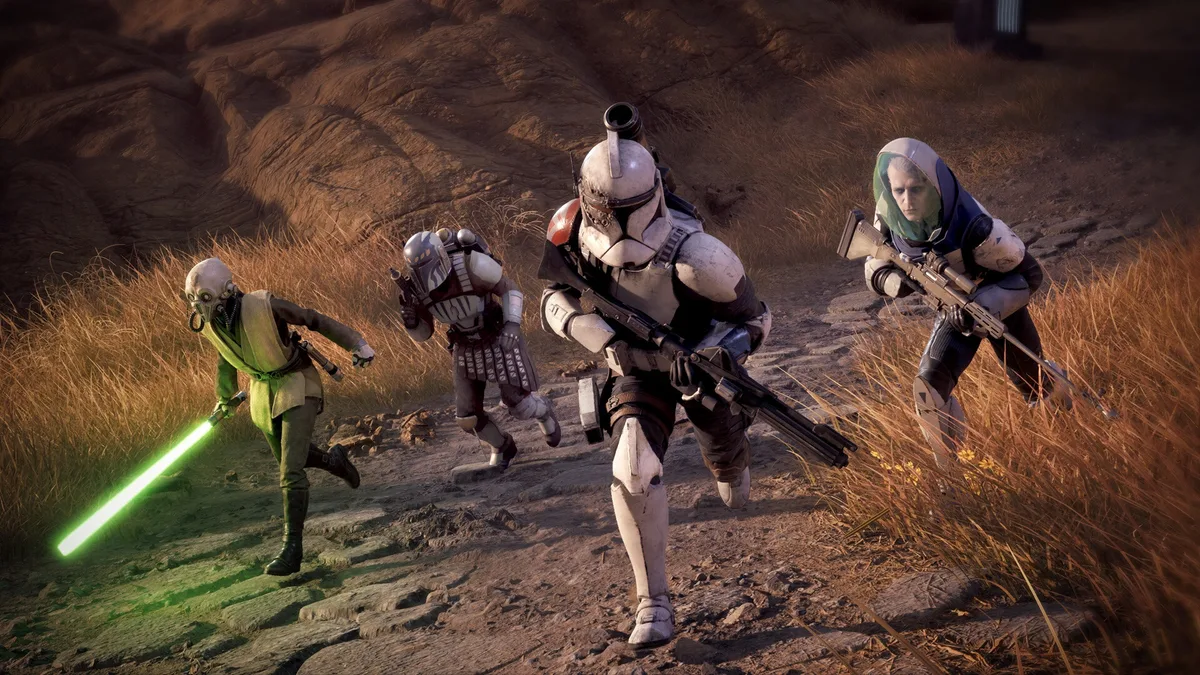
On the content side, the game offers eight standard specializations open to every operator. Four exotic classes sit on top: the Jedi Padawan tied to Tel-Rea Vokoss, the Mandalorian Warrior tied to Cly Kullervo, the Astromech, and a fourth that guides do not detail. A secondary specialization unlocks around the middle of the campaign, which refreshes squads along the way.
What the game loop contains
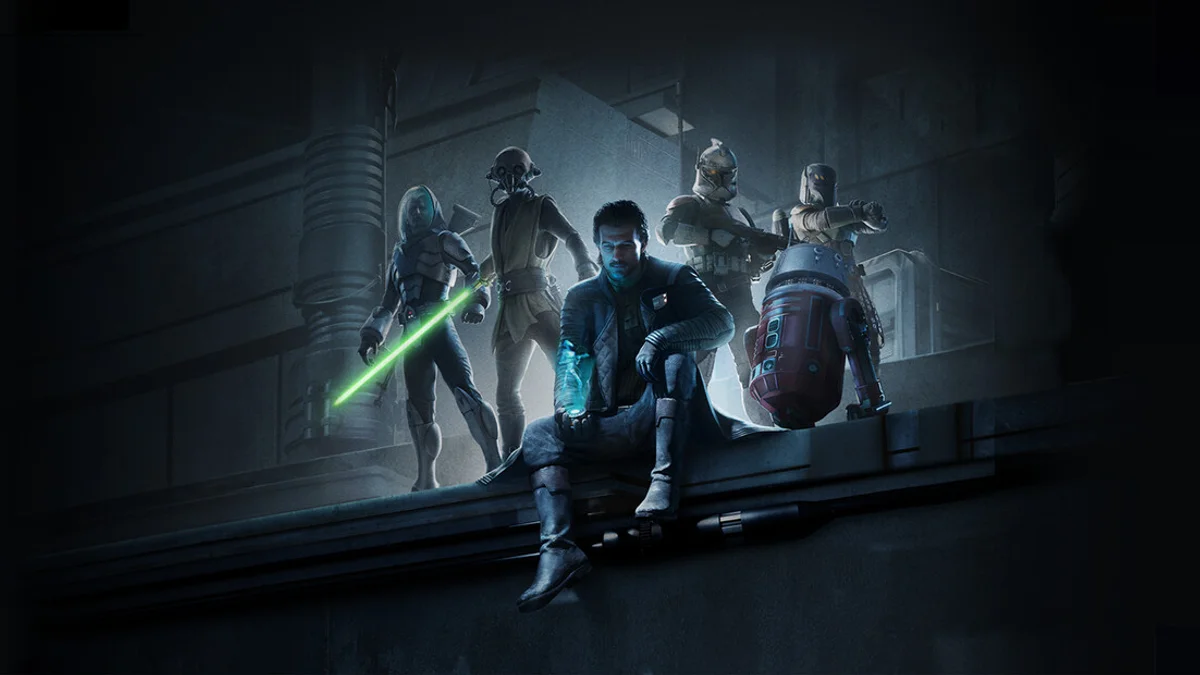
The Steam page describes a single-player, turn-based tactics game set late in the Clone Wars. The player leads Hawks, a former Republic officer, at the head of Zero Company, with tactical operations, investigations and other missions. Operators improve from mission to mission and unlock combat synergies. Players can also customize Hawks and create original characters.
EA says the galaxy map holds more than 150 planets. That figure describes the volume of missions, not their variety, and specialist reviewers do point to limited objective variety. For a buyer, the question is whether the loop of recruiting, upgrading and deploying can carry 30 to 40 hours. Player feedback, 83% positive on Steam, suggests that it does for most people.
Permadeath, Hawks and Beskar mode: set the game up before playing
Permadeath is on by default. An operator who accumulates three injuries dies for good. The setting is chosen when a campaign starts and cannot be changed afterwards, according to guides from KeenGamer and AllThings.how. Hawks, the player’s commander, cannot be killed by injuries. Outside Beskar mode, losing Hawks fails the mission, which can be replayed.
Beskar mode is a separate modifier. It forces a single save, with no manual saving and no reloading to undo an outcome. In that mode, losing Hawks or failing a crucial mission ends the campaign. It stacks with any difficulty level (Story, Normal, Hard, Expert), and difficulty itself can be changed between missions.
The point for buyers is that these choices are made when the game is created. A player torn between maximum tension and comfort has to decide up front, because a campaign started without permadeath cannot switch it back on.
Patches 1.1 and 1.2: what changed since release
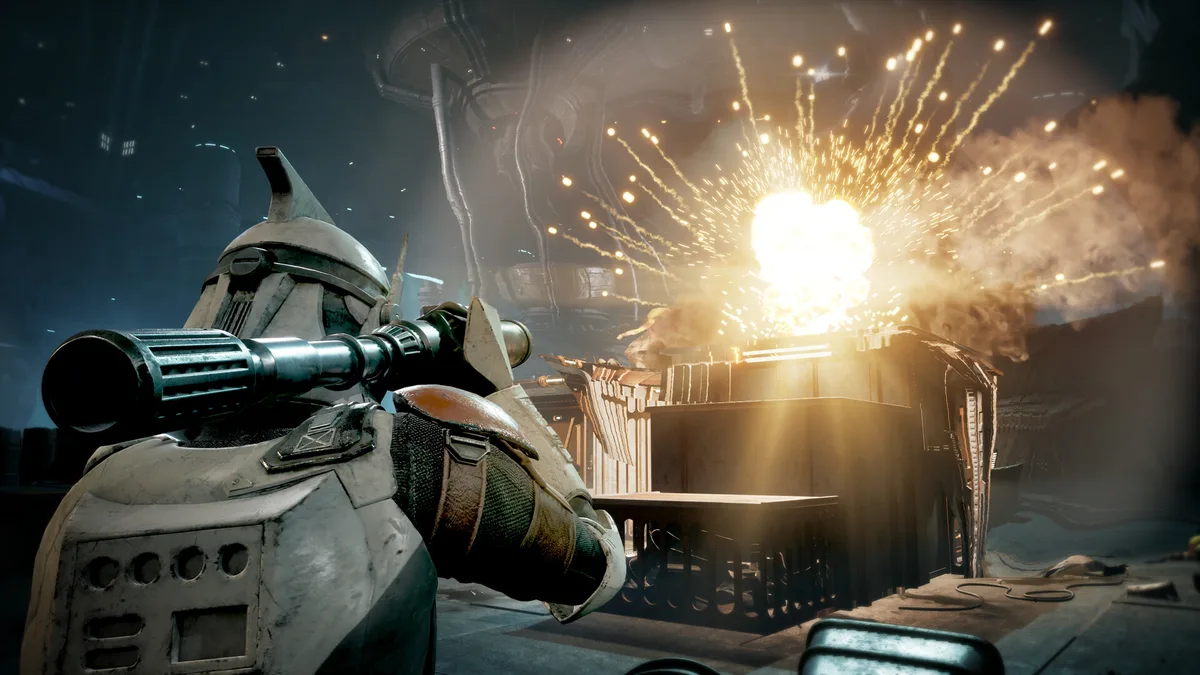
Patch 1.1 on September 9 fixed about sixty issues, according to EA’s list. They include a bug that made shots with a 100% hit chance miss, save corruption after a sudden shutdown, a crash in Beskar mode, Beskar saves that were temporarily deleted, and visual stutters. Those technical flaws were among the press’s most frequent complaints.
Patch 1.2 on October 15 goes further. It adds modifiers that can be enabled when starting a new campaign, after the tutorial. The first setting covers injury limits: instant death on the first defeat, two strikes, or three strikes by default. The second adds a chance of permanent death after every tactical defeat, either a flat 20% or escalating to 40% and then 80%. Other options reduce maximum health gains, limit Advantage generation or let enemies land critical hits.
The patch also rebalances a few abilities, such as the Astromech’s Self-Repair, now limited to twice per combat, and lowers the cost of many facility upgrades. Recruiting now always costs 100 credits. These changes target replayability and tension, two weak points raised by critics, without claiming to replace a real New Game Plus.
What the reception says
Metacritic stands at 84 from about 70 critic reviews as of October 26, down from 86 when the first reviews landed. Players are more measured than at announcement: the Steam page shows 83% positive across more than 18,000 reviews. Recurring complaints concern technical issues (stutter, camera, animation bugs), a tone some reviewers found too cautious, and limited objective variety. Our analysis of the review scores and critical reception covers those nuances.

Who should buy now, and who should wait
XCOM fans will find a familiar structure with ideas of its own: an Advantage resource shared across the whole squad and a base to explore between missions. For them, the Standard price is justified.
Star Wars fans new to tactics get four difficulty levels that can be changed between missions. They can play without permadeath, as long as they decide at the start. Waiting for a sale is reasonable if budget matters, since nothing forces a rushed purchase.
Players looking for replay value should weigh a 30 to 40 hour campaign against their expectations. The patch 1.2 modifiers extend the lifespan, but the story stays linear with no New Game Plus.
The signal to watch is the studio itself. Bit Reactor confirmed in early October that it passed one million copies and brought back part of its team, as the article on the million copies and patch 1.2 explains. No expansion and no New Game Plus is announced today.
Going further
Sources
- news.ea.com /press-releases/press-releases-details/2026/Command-the-Clo…
- store.steampowered.com /app/2075800/STAR_WARS_Zero_Company/
- pcgamer.com /games/strategy/star-wars-zero-company-is-a-30-40-hour-line…
- techradar.com /gaming/star-wars-zero-company-takes-30-40-hours-to-beat-de…
- keengamer.com /articles/guides/star-wars-zero-company-best-difficulty-set…
- allthings.how /star-wars-zero-company-difficulty-modes-explained-story-to…
- ea.com /games/starwars/zero-company/news/patch-notes-1-1
- ea.com /games/starwars/zero-company/news/patch-notes-1-2
- gamewave.fr /star-wars-zero-company/star-wars-zero-company-lance-son-pa…
- hacktheminotaur.com /swzc/ultimate-star-wars-zero-company-classes-guide/
- zerocompanybuilds.com /classes
- metacritic.com /game/star-wars-zero-company/
- #Star Wars Zero Company
- #Bit Reactor
- Electronic Arts
- Tactical Strategy
- #Clone Wars
- #Edition 2026