Julian Gollop stands by it: his new game pleases beginners, not X-COM fans
The father of X-COM is not trying to seduce purists
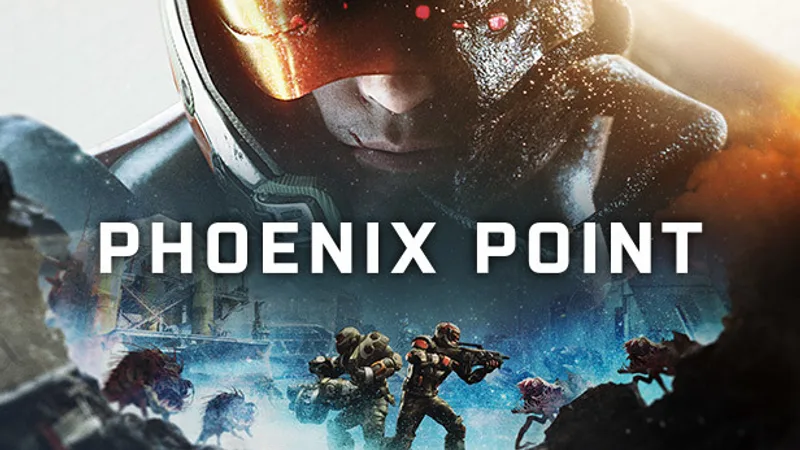
Julian Gollop, the legendary creator of the X-COM series, has always had a no-filter approach when talking about his games. In a recent interview with PC Gamer, he openly stated that his latest project, Phoenix Point: Behemoth Edition (and more broadly his approach to strategy games in recent years), targets beginners first rather than long-time fans of the franchise. A statement that may come as a surprise, but one that reflects a market reality: strategy games today must appeal beyond their niche to survive. Gollop does not hide it: “The game is successful with people who may never have played a strategy game in their life.” A sentence that says a lot about his current philosophy. Out go ultra-complex mechanics and excessive micromanagement; in comes an accessibility that attracts new players. But this direction inevitably leaves some X-COM fans wanting more, used to demanding titles like XCOM: Enemy Unknown or Xenonauts.
A shift toward accessibility that divides
To understand this stance, we have to look back at Julian Gollop’s recent history. After the critical and commercial success of XCOM: Enemy Unknown (2012), developed by Firaxis, many expected a return to his roots. Yet with Phoenix Point (2019), and its various iterations such as the Behemoth Edition, Gollop chose a different path: a mix of turn-based strategy and base management, but with a far gentler learning curve than the classics of the genre. The problem? Veterans of pure tactics often criticized the game for a lack of strategic depth. The combat, although dynamic, sometimes lacks that calculated tension that made the old X-COM games special. The enemies, although varied, do not always present that level of challenge that pushed players to optimize every move. For Gollop, it is not a bug, it is a feature: “If old fans do not resonate with it, that is fine. What matters is that the game finds its audience.”
The creator’s dilemma: innovate or please the fanbase?
This stance raises a crucial question in the video game industry: should you prioritize innovation and accessibility at the risk of disappointing long-time fans, or stay true to a proven formula that limits the audience? Gollop seems to have decided. And his reasoning is not without logic. Strategy games, long confined to a niche audience, today have to cope with a market where competition is fierce. Take XCOM 2 (2016): an excellent game, but still very technical, with cover mechanics, line-of-sight and resource management that can put off newcomers. Conversely, titles like Into the Breach or Wasteland 3 managed to attract a wider audience by simplifying certain aspects without sacrificing depth. Gollop seems to want to follow that path, even if it means letting go of some purists.
Phoenix Point: a mainstream game that owns its choices
So, is Phoenix Point a bad game? No. Is it an X-COM like the ones we loved in the 90s? Not anymore. And that is precisely where it hurts for first-generation fans. The game relies on: - A smoother combat system, with dynamic animations and a more intuitive interface. - Simplified base management, less punishing than in the old X-COM games where one bad decision could mean the end of the game. - A stronger “survival” angle, with crafting and resource management mechanics that are closer to Fallout Shelter than to UFO: Enemy Unknown. For a player discovering the genre, it is an excellent entry point. For a veteran who spent nights optimizing squads in XCOM: Apocalypse, it is a different experience, sometimes a frustrating one. Gollop acknowledges it: “Some players want a level of complexity that I no longer offer. And that is OK.”
Have X-COM fans been abandoned?
The question burning on fans’ lips is simple: will there ever be a true spiritual successor to X-COM: UFO Defense? A game where every shot counts, where ammunition stockpiles and soldier morale are crucial, where one mistake can cost an entire campaign. For now, Gollop’s answer is clear: he will not be the one to make it. Yet the market is not completely abandoned. Games like Xenonauts 2 or Battle Brothers prove that there is still demand for demanding tactical strategy. But these titles remain marginal compared to blockbusters like Civilization or Total War. Gollop, for his part, has chosen to ride another wave: that of casual players who want tactics without the headache.
The future of strategy according to Julian Gollop
So, what does the future of strategy games look like according to the father of X-COM? Based on his statements, he is betting on: 1. Accessibility: more intuitive mechanics, better-integrated tutorials, a progressive difficulty curve. 2. Narrative: stronger stories, more charismatic characters to attract an audience used to RPGs or action games. 3. Multiplatform: adaptation to consoles and mobile, where strategy games still struggle to break through. It is a pragmatic, almost business-oriented vision, which can disappoint purists. But it is also a reality: without new players, the genre risks dying out slowly. Gollop therefore prefers to broaden his audience, even if it means leaving some fans by the wayside.
Conclusion: a creator who owns his choices, for better and for worse
Julian Gollop has never been the type to beat around the bush. When he says his game pleases beginners and not X-COM veterans, it is not provocation, it is a statement of fact. And thinking about it, it is almost refreshing. In an industry where developers spend their time promising the moon and then disappointing, Gollop owns his priorities: make a game that works, even if it means not pleasing everyone. Does that make Phoenix Point a bad game? No. Does it make it an X-COM like the ones we loved? No. But after all, maybe that is what a creator’s maturity is: knowing how to evolve, even if it means leaving part of one’s legacy behind. For X-COM fans longing for nostalgia, there are still mods, remakes and indie games that perpetuate the spirit of the old titles. For everyone else, those discovering the genre, Phoenix Point and Gollop’s future projects could well be an excellent entry point. After all, as he says himself: “If old fans do not resonate, that is fine. What matters is that the game lives.” And on that point, he is probably right.