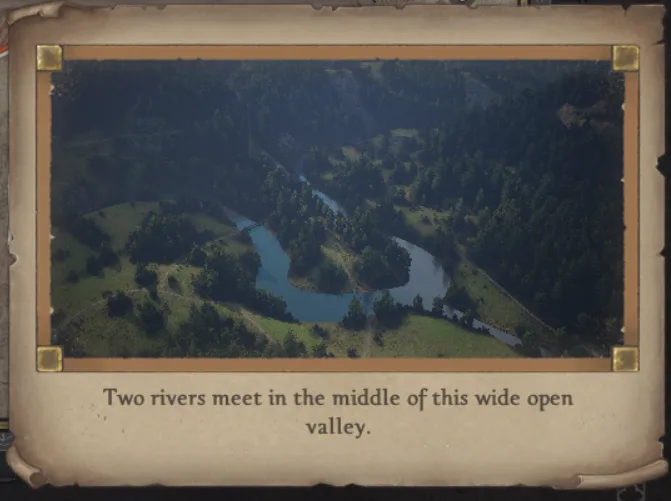
In the beta 0.8.110 announcement, Slavic Magic acknowledges that auto-rotating crops could purge an unharvested yield and that the time windows for farming work were too short. The beta, released on September 27, 2026, reworks the farming system accordingly.
Update, October 26, 2026: The beta kept evolving without reaching the main branch. The 0.8.111 hotfix (Steam announcement) and then beta 0.8.117 on October 24 (Steam announcement) tweak farming further: fields with a crop selected but nothing planted regenerate fertility like fallow, and Rye’s fertility bonus goes from x1.5 to x1.75.
Crops Now Have a Season — and You Can’t Override It
The patch splits all crops into two fixed seasonal categories. Wheat and Rye become winter crops, with farming tasks locked to their appropriate season (they can still be sown in spring for a quicker return at a lower yield). Flax, Barley, and Oats shift to spring crops under the same constraints.
Rotation is now always on for every field, a setting the notes label experimental. It triggers in three cases: after a harvest completes, on September 1 for fields with nothing to harvest (fallow included), and on November 1 for fields whose crop died unharvested. The biggest quality-of-life addition: an unharvested crop in October now loses yield gradually instead of forcing an immediate rotation. That grace period leaves a window of time to salvage the field.
In practice, planning fields now means thinking one or two seasons ahead — not just checking remaining fertility.
The Dunghill: Fertilizer From Your Animals’ Manure
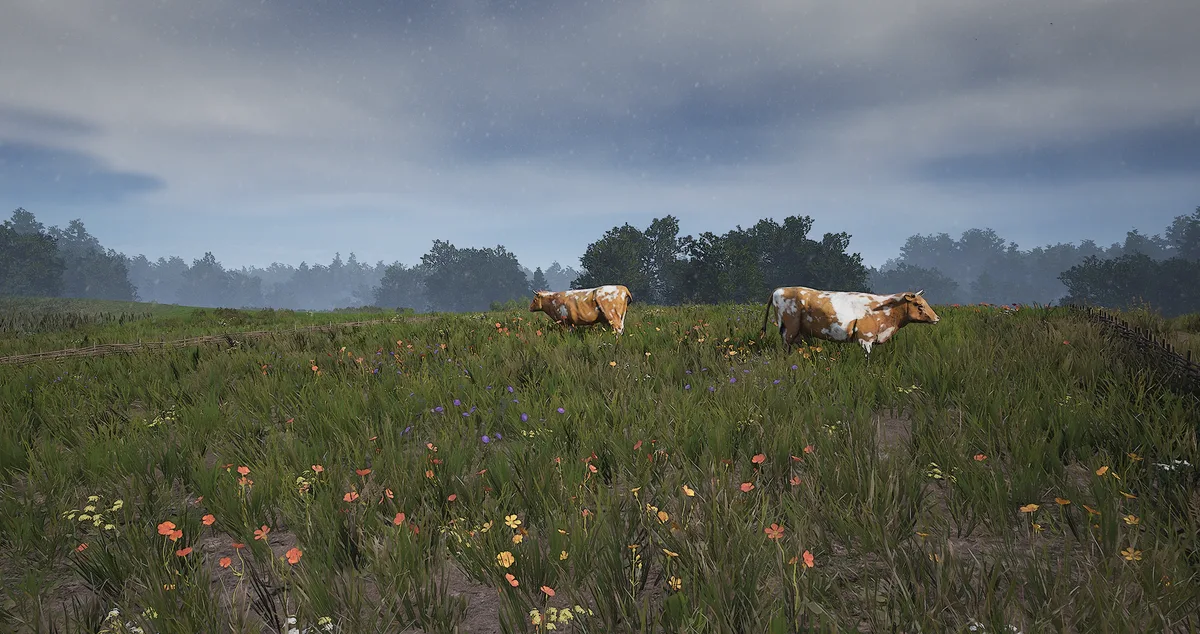
The most structurally significant addition is the Dunghill, a new dedicated building that anchors the fertilizer chain. Pasture animals produce manure at rates that vary by species; Dung Collector families gather it and turn it into Fertilizer at the Dunghill. Farmhouse workers can then apply that fertilizer to a Fallow Field during summer to raise its maximum fertility.
One logistics constraint matters: manure and fertilizer can only be stored at the Dunghill. No general warehouse accepts them. For manors with limited livestock, the worker investment might not pay off immediately.
The payoff for larger estates is real: fertilizer persists on a field for more than two years, making it a long-term optimization rather than a resource to renew every cycle. A manor rich in animals can progressively raise its field fertility.
What This Means for Ongoing Saves
The patch also reworks the field interface, which now shows a timeline of the next twelve months of farm activity. Plowing fallow fields stays possible in spring, summer and autumn, but at the lowest priority of all tasks. On the content side, the beta adds six “Rural Foundations” Perks (unlocked at Settlement Level 3) and the Fishmonger artisan, who smokes fish.
This beta follows Major Update 8, released on August 27, whose announcement promised Perks for late September. A 0.8.111 hotfix followed on September 29. Version 0.8.110 remains in beta and has not yet merged into the main branch.
For players mid-save, impact depends on current livestock volume. A crop-focused manor with no animals gains nothing from the Dunghill until livestock are developed. The question is whether forced rotation introduces friction in long saves or whether the new tolerance windows keep it manageable — the community testing phase will answer that.