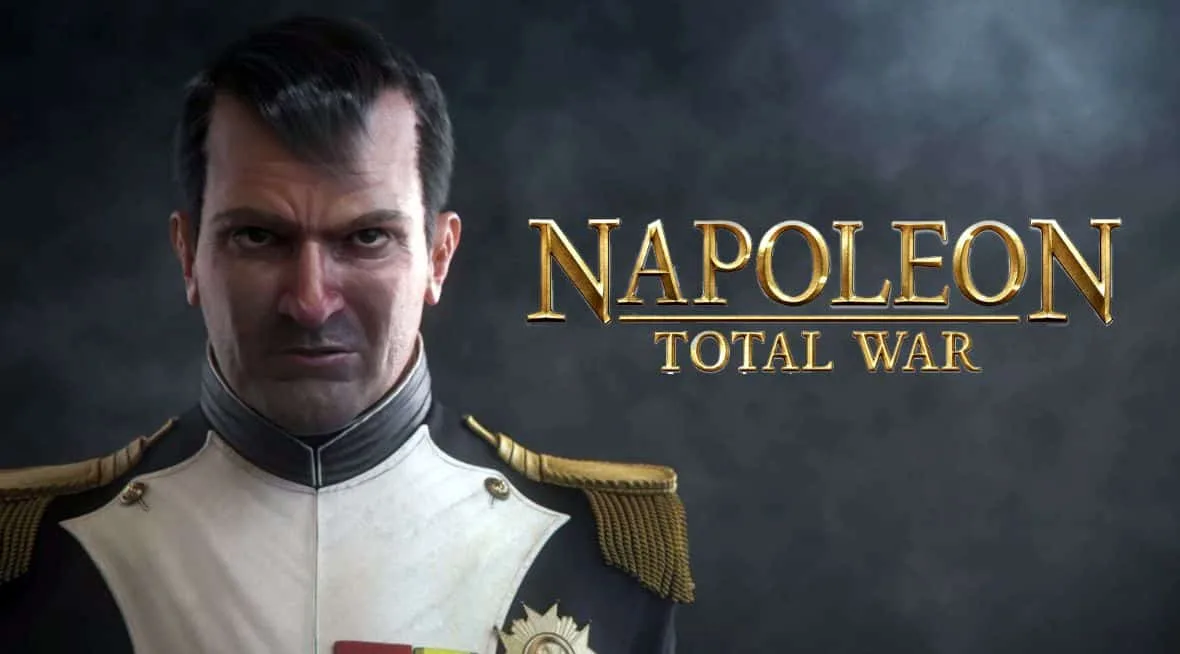
Napoleon Total War (NTW) is one of the most iconic installments of Creative Assembly’s Total War series. Released in 2010, it remains in 2026 a reference for fans of historical strategy and the Napoleonic era. Here’s the complete guide to rediscover this classic.
Why Napoleon Total War is still a cult game
Napoleon Total War stands out for:
- Reference-grade tactical gameplay: 40,000+ unit battles, authentic Napoleonic formations (squares, lines, skirmishers), complex orders.
- Improved AI vs Empire Total War: Creative Assembly rewrote much of the AI for this title.
- Unique atmosphere: impressive orchestral soundtrack, detailed models, cinematic combat animations.
- Active modding community even 15 years after release.
Available campaigns
Italian Campaign (1796-1799)
Young Bonaparte conquers Italy. Ideal starting campaign: smaller scale, few nations, learning the mechanics.
Egyptian Campaign (1798-1801)
Bonaparte in the East. Exotic campaign with new units (Mamluks, camels) and fortress sieges.
Grand European Campaign (1805-1812)
The most ambitious. Play 20+ European nations (France, UK, Austria, Prussia, Russia, Spain, Ottomans…). Conquer Europe as Napoleon, or stop his domination as Wellington / Kutuzov.
Historical battles
Standalone scenarios: Austerlitz, Jena, Borodino, Waterloo. Perfect for quickly testing tactics without committing to a campaign.
Campaign map strategy
- Economy first: invest in industry before army. 3 industrialized provinces beat 10 agricultural ones.
- Active diplomacy: alliances and treaties prevent two-front wars. Offer neutral provinces to buy peace.
- Concentrated army: prefer 2 XXL armies over 5 medium ones. NTW AI collapses against a well-managed total army.
- Tech research: prioritize rifled artillery + Minié rifles = absolute tactical superiority over AIs.
Best Napoleon Total War mods
1. DarthMod Napoleon (THE essential mod)
Massive AI improvement (in battle and on the map), unit balance, combat realism (morale, fatigue, weapon range). The mod that “fixes” NTW.
2. NTW3 (complete modernization)
Full retexture, new units, new events, graphical modernization. Makes NTW feel like a 2020 Total War.
3. Masters of Europe
Massive Grand Campaign extension: new minor nations, scripted events, unique challenges.
4. Ultimate Commander
Subtle balance mod: more historical consistency, unit adjustments, small gameplay bonuses.
Tips to win your NTW battles
Infantry
- Square against cavalry, never line against frontal charges.
- Fire at will for multiple targets, volley fire to concentrate on one.
- Reserves 200m back to counter-attack.
Cavalry
- Charge from flank or rear, never frontally into line infantry.
- Cuirassiers = punch, hussars = pursuit, dragoons = versatile.
- Always have 2 cavalry units to exploit a breakthrough.
Artillery
- Place it on high ground, ideally central.
- Use cannonballs at long range, canister up close.
- Always protect it with at least 1 infantry or cavalry unit.
Orders
- Holding the line: the square holds defensively, enemy bleeds in charges.
- Hammer and anvil: your infantry pins, your cavalry rolls behind.
- Defensive hill: high ground + artillery = huge bonus vs AI.
Conclusion
Napoleon Total War remains, in 2026, a reference in historical strategy. For a few euros on Steam sale + free DarthMod, you get hundreds of hours of deep tactical experience. A must for any Total War or Napoleonic history fan.
FAQ
Is Napoleon Total War still worth it in 2026?
Yes. Despite being 15 years old, NTW remains one of the best historical Total War games. Visually dated but solid tactical gameplay, active mods (DarthMod, NTW3), unmatched Napoleonic atmosphere. Regularly on sale for under $5.What are the best Napoleon Total War mods?
DarthMod Napoleon (improved gameplay, smarter AI), NTW3 (graphical modernization + extra content), Masters of Europe (campaign extension), Ultimate Commander for balance.How do I enable cheats in Napoleon Total War?
Unlike Paradox, NTW has no native console. Cheats go through preferences.txt file editing (unlimited army) or mods like Cheat Menu on the Steam Workshop.What's the best NTW campaign?
The Europe Campaign (Grand Campaign) remains the most ambitious — 1805 to 1812, 20+ playable nations. Italian and Egyptian campaigns are shorter but excellent for learning mechanics.Napoleon Total War or Empire Total War?
Napoleon for tactical excellence (reworked AI, smaller scale but more polished). Empire for scope (whole world, navy, America) with weaker AI.How do I win the historical Battle of Waterloo?
As France with Napoleon, concentrate your cuirassiers on the left flank against the English, block the Prussian arrival east with square infantry. Meaningful tactical depth that makes NTW battles addictive.
- napoleon-total-war
- total-war
- creative-assembly
- sega
- guide
- historical