Stellaris Turns 10 by Removing the Home Planet Entirely
On May 9, 2016, Paradox Development Studio launched Stellaris. A decade later, the studio is celebrating with a move that redefines the genre’s core assumption. On June 15, 2026, the Nomads DLC arrives alongside the free 4.4 ‘Pegasus’ patch, and it changes the opening question of every run. Instead of Which planet do I colonize first? the question becomes: Why stop at all?
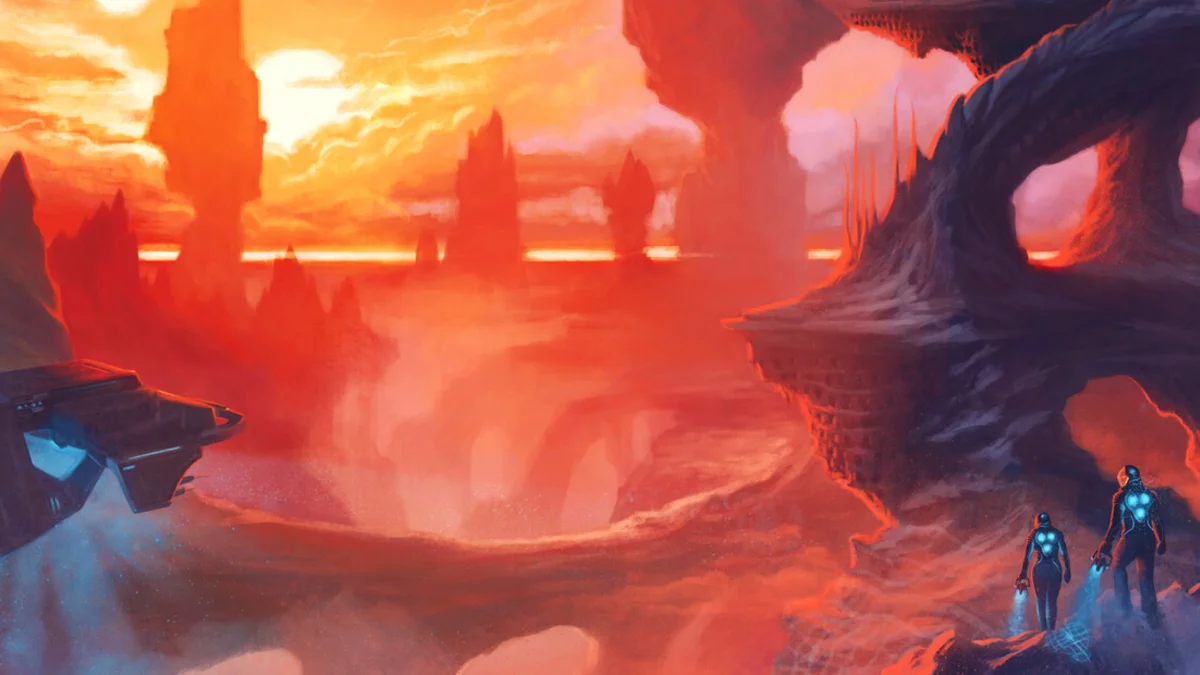
Nomads introduces Nomadic Empires — a playstyle where you have no homeworld, no systems to claim, and no reason to stay put. Your capital is an Arkship: a massive, upgradable mobile station that replaces planets entirely and carries your civilization across the stars.
Three Arkship Classes, Three Ways to Roam
The Arkship is not cosmetic. It is your empire’s heart, your mobile shipyard, and your fortress. It replaces colonized worlds entirely and comes with a dedicated Ship Controls interface for customization and upgrading. Three base classes ship at launch:
- Military Class: a mobile flagship built for power projection, with unique fleet orders and reinforced armament.
- Scientific Class: a roaming laboratory optimized for research and exploration, granting faster discovery rates.
- Civilian Class: an industrial hub capable of unparalleled resource extraction through movement-based economics.
Each class upgrades through Tiers via internal Systems and external Modules, creating a progression loop that feels like planet management — minus the planet.

Waystations and Waylines: the Economy of Motion
Instead of claiming systems, Nomadic Empires build Waystations along their routes. These create permanent Waylines — interstellar trade corridors that harvest resources with every pass-through. The system also benefits neighboring settled empires, naturally positioning you as the pivot point of galactic commerce.
This is a flow economy rather than an accumulation economy. You don’t hold territory: you are the territory.
Four Origins, Four Stories
Nomads ships with four exclusive origins that define your starting conditions and narrative arc:
- Voidfarers — The default origin. Flexible, no hard constraints. Ideal for learning nomadic mechanics at your own pace.
- Heirs of the Khan — You play as the successor of a murdered Khan, evading marauder hit-squads through trickery and bribery.
- The Sacred Path — Guide a fleet of pilgrims toward ancestral holy sites in a faith-driven galactic journey.
- Forever Cruise — Manage a society split between a pampered elite and an overworked crew. Expect social tension mechanics.

The Ambitions System: a New Endgame
Nomads also introduces Ambitions, an evolution of the Crisis Path system from previous DLCs. The “Defender of the Galaxy” Ascension Perk — previously passive — becomes the entry point to a full narrative path that can rival a Galactic Nemesis, Awakened Empire, or End Game Crisis in scale.
For nomadic empires, this opens endgames built entirely around motion rather than territorial control, giving long runs a new direction.
Release, Patch, and Season 10
Stellaris: Nomads drops simultaneously with the 4.4 ‘Pegasus’ patch on June 15, 2026. The patch includes free base-game changes; nomadic mechanics require the DLC or Season 10 Expansion Pass. The Season 10 roadmap continues with patch 4.5 ‘Cygnus’ and then 4.6 ‘Corona Borealis’, which brings the Willpower expansion and two Scenario Packs.

Preview Verdict
A playable nomadic empire has been a modder’s dream in Stellaris for years — Paradox famously called it “impossible to balance.” Choosing their 10th anniversary to finally ship it signals real confidence in the current design. The four origins ensure instant replayability and the Wayline system creates a fundamentally different economy, not just a visual reskin.
June 15 will tell the whole story. In the meantime, check our top 10 best Stellaris mods and our breakdown of the 4.3.6 Cetus patch to understand where the game stands before this new chapter.
FAQ
When does Stellaris Nomads release?
Stellaris: Nomads releases on June 15, 2026, alongside the free 4.4 'Pegasus' patch. It is included in the Season 10 Expansion Pass.Can you play a nomadic empire without the Nomads DLC?
No. Arkships, Waystations, the four nomadic origins, and the Ambitions system are exclusive to the paid DLC. The free 4.4 Pegasus patch brings base-game changes for all players.What origins come with Stellaris Nomads?
Four origins launch with the DLC: Voidfarers (standard start), Heirs of the Khan (fugitive Khan successors), The Sacred Path (galactic pilgrimage), and Forever Cruise (fractured society of elites and overworked crew).