
Shogun: Total War, the hacked-together RTS that replaced the Monkey RPG
For years, a story has circulated about the origins of Shogun: Total War. Creative Assembly supposedly hacked together a quick, cheap RTS to get back on its feet and pay for its real project, a Monkey RPG. This article actually told that story in its first version. Half of it is true: Shogun did start as a modest strategy game, almost a throwaway. The other half is false. By the time Shogun started, the Monkey RPG no longer existed. It was not funded — it was replaced.
- The Monkey RPG was supposed to be developed in Singapore to take advantage of tax breaks.
- Those breaks proved disappointing: the RPG was abandoned, and the team moved on to an RTS.
- That RTS was meant to be a “B-grade C&C clone”, quick and cheap to make.
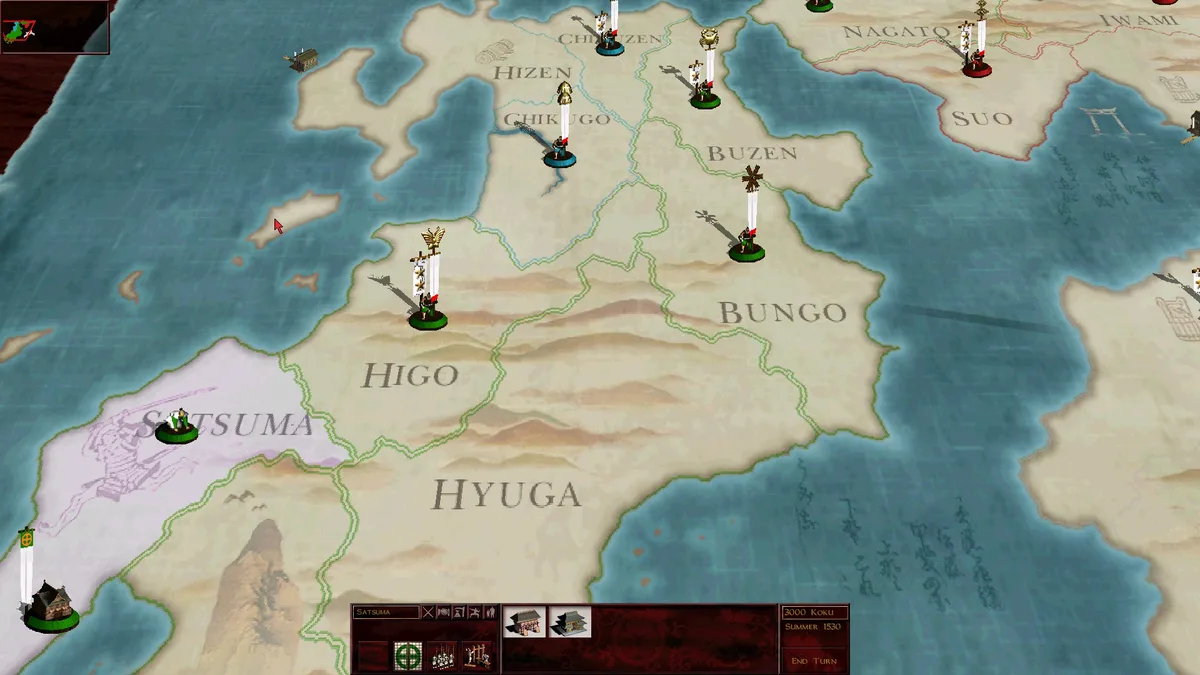
- 3D graphics cards, a lowered camera and a campaign map added along the way turned it into the first Total War, released June 12, 2000 by Electronic Arts.
The throwaway-game legend
The popular version has everything going for it. A small studio on the brink of bankruptcy, an RPG dream put on hold, a samurai game knocked together to pay the bills. Then a surprise hit that made the dream unnecessary. The old version of this article even added that the RPG was abandoned because players were demanding a Shogun sequel.
No serious source tells that story. The quote about the “B-grade game” was attributed there to Mike Simpson in PC Gamer. It actually comes from a long retrospective Simpson gave to the site Funambulism in 2011. And in that interview, Simpson talks neither about bankruptcy nor about a Shogun tasked with paying for another game.
What actually killed the Monkey RPG
Recruited by Creative Assembly to set up a second team alongside the EA Sports games, Simpson tells a very different sequence. That team’s first project is a role-playing game based on Monkey, the TV series adapted from the Chinese novel Journey to the West. It is to be produced in Singapore, where big tax advantages await the studio.
Those advantages turn out to be far less interesting than expected, and the team stays in the United Kingdom. The RPG stops right there. The anecdotes published for Creative Assembly’s 30th anniversary, relayed by CGMagazine in 2017, say the same thing: Shogun began as an RPG inspired by the novel, and the studio very nearly moved to Singapore. So the dream did not die under the weight of Shogun’s success. It died because of a tax setup that did not hold up.
A “B-grade C&C clone”, genuinely hacked together
With the RPG buried, the team looks at what sells. Krush Kill ‘n’ Destroy, a Command & Conquer clone, sold very well. Tim Ansell, the studio boss, then asks Simpson for a quick, cheap game, a “B-title”. Simpson sums it up: the team sets out to make a B-grade C&C clone, in 2D and top-down.
The hacked-together side is no legend. The team is tiny: around seven people when artist Nick Tresadern joins, according to PC Gamer. Simpson talks about around fifteen people at the heart of the project, maybe twenty by the end. The starting plan is not ambitious at all. That is what makes what follows interesting.
How the clone became Total War
Three changes derail the initial plan, in the right direction. 3dfx graphics cards spread and make real 3D terrain possible. Then the camera is lowered to the horizon, at general’s height, instead of hovering over the battlefield. Finally, back-to-back battles feel too short and devoid of stakes.
The team therefore adds a turn-based campaign map. “The campaign map was meant to give context to the battles,” Tresadern explained to PC Gamer in 2020: the player chooses which province to invade and which army to face. On the field, soldiers remain 2D sprites laid over 3D scenery. But morale, fatigue and weather already matter, to the point that a downpour can stop arquebuses from firing. Historian Stephen Turnbull advises the team on the Sengoku period. Electronic Arts publishes the game on June 12, 2000 in North America and June 16 in Europe, and GameSpot names it best strategy game of the year.
Our take: the hack job was the right plan
What matters here is not saving the reputation of the lost RPG. The throwaway-game legend reverses the roles: it makes the RPG the real project and Shogun a necessary evil. In reality, the RPG rested on a fragile tax calculation, and Shogun on a modest order nobody tried to lock down.
That lack of constraints is exactly what paid off. A small team under little pressure was able to change the camera, the engine and the structure mid-project. The campaign map, the heart of every Total War since, was born as a fix for battles without stakes. Yet the legend only remembers the sacrificed dream. For players, the real lesson is elsewhere: the series’ best ideas came out of a project everyone thought was disposable.
For the full account of the game’s development and content, our feature The rise of Total War Shogun in the game industry details clans, koku and the Mongol Invasion expansion. Simpson’s role is told in the Mike Simpson story.
See also
- Game page — Total War: Shogun
- The rise of Total War Shogun in the game industry
- The Mike Simpson story in Total War
- Shogun 2, back to Sengoku Japan in 2011
- All RTS articles
Sources
- Creative Assembly retrospective with Mike Simpson — Funambulism (2011)
- Creative Assembly turns 30 — CGMagazine (2017)
- 20 years ago, Shogun: Total War started a long legacy — PC Gamer (2020)
- A Retrospective of Shogun: Total War — No Dice No Glory (2024)
- Shogun: Total War — Wikipedia
- Official Total War website