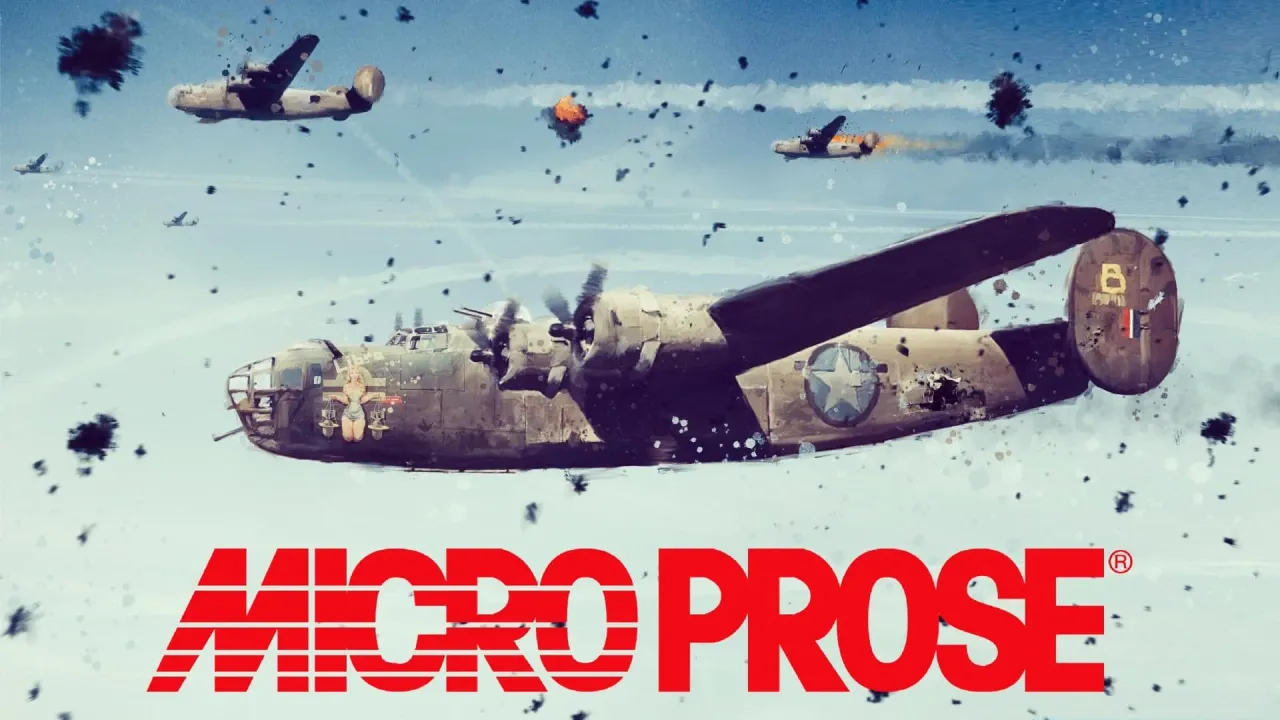
Founded in 1982 by Sid Meier and Bill Stealey, MicroProse is an American video game studio that had an indelible impact on the simulation and strategy game industry. Known for its innovative, captivating games, the studio marked video game history with iconic titles. This article explores MicroProse’s history, its famous games, its innovations, the challenges it faced and its lasting legacy.
The beginnings of MicroProse
Foundations and philosophy
MicroProse was founded in Hunt Valley, Maryland, by Sid Meier, a talented game developer, and Bill Stealey, a former US Air Force pilot. MicroProse’s vision was to create games that combine realism and entertainment, offering players immersive, educational experiences. This philosophy quickly led to the creation of flight simulation games, leveraging Stealey’s aviation expertise.
Early successes
MicroProse’s first major success was “Spitfire Ace” (1982), a flight simulator that captivated players with its realism and engaging gameplay. This success was followed by a series of flight simulators, notably “F-15 Strike Eagle” (1985) and “Gunship” (1986), which cemented MicroProse’s reputation as a leader in simulation games.
Iconic games
Civilization
One of MicroProse’s most influential games is undoubtedly “Civilization” (1991). Created by Sid Meier, this turn-based strategy game lets players build and develop a civilization from the Stone Age to the Space Age. “Civilization” was acclaimed for its strategic depth, replayability and educational impact, becoming a pillar of the genre and spawning numerous sequels and spin-offs.
X-COM: UFO Defense
In 1994, MicroProse published “X-COM: UFO Defense” (also known as “UFO: Enemy Unknown” in Europe). This tactical strategy game combines resource management, scientific research and turn-based tactical combat against alien invaders. “X-COM” became a cult classic and influenced many modern strategy games.
Pirates!
“Pirates!” (1987) is another landmark MicroProse title, offering a unique adventure experience where players play a pirate sailing the Caribbean. The game combines exploration, naval combat and crew management, offering great freedom of choice and high replayability.
Transport Tycoon
Created by Chris Sawyer and published by MicroProse in 1994, “Transport Tycoon” is an economic simulation game where players build and manage complex transport networks. The game was praised for its depth, realism and intuitive interface, becoming a favorite among simulation fans.
Innovations and contributions
MicroProse was at the forefront of innovation in the video game industry. Here are some of its most notable contributions:
- Realism and complexity: MicroProse games are known for their attention to detail and realism, whether flight simulators or strategy games.
- User interface: MicroProse was often a pioneer in creating intuitive, functional user interfaces, making it easier for players to access complex game mechanics.
- Replayability: MicroProse games are designed to offer high replayability, with dynamic scenarios and meaningful choices that influence the course of the game.
Challenges and transformations
In the 1990s, MicroProse experienced financial difficulties, partly due to increased competition and high development costs. In 1993, the studio was acquired by Spectrum HoloByte, but continued to operate under its own name. Despite efforts to turn things around, MicroProse was sold several times, and its influence gradually declined.
Revival attempts
Despite these challenges, MicroProse continued to publish quality games, but fierce competition and industry changes made it difficult to maintain its dominant position. In 2001, the MicroProse brand was put on hold, although some of its games continue to live on through re-releases and adaptations.
Legacy and influence
MicroProse’s legacy is undeniable. Its games not only entertained millions of players, but also inspired a generation of game developers. The concepts and mechanics introduced by MicroProse are still used in many modern games. Titles like “Civilization” and “X-COM” established standards of quality and complexity that continue to influence strategy and simulation games.
Conclusion
MicroProse will forever be etched in video game history as an innovative, influential studio. Its games marked the industry with their realism, depth and replayability, and continue to captivate players around the world. Although the studio faced challenges, its legacy endures through the many games it created and the innovations it introduced.
It is worth noting that many of MicroProse’s franchises outlived the studio itself: Civilization is now developed by Firaxis, X-COM lives on through spiritual successors like Phoenix Point, and Transport Tycoon inspired a whole lineage of management games. This ability to seed ideas that keep growing long after the original team moved on is perhaps the clearest measure of the studio’s influence on the industry.