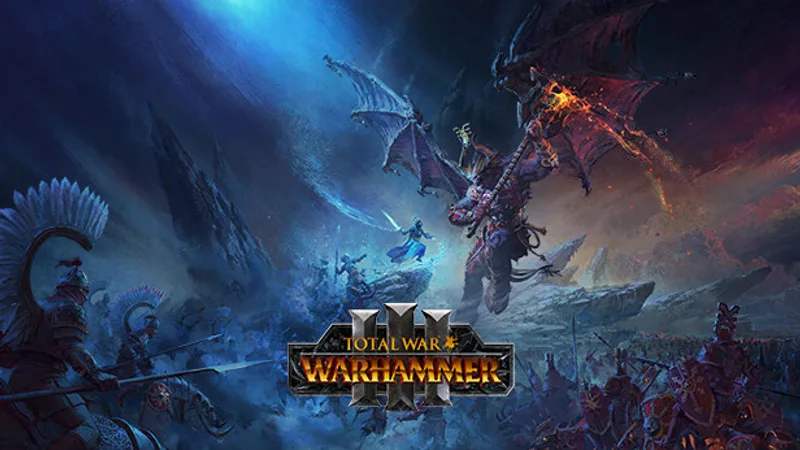
Total War: Warhammer 3 — the map spots that can make (or break) your campaign
Surprises that change everything

In Total War: Warhammer 3, the Chaos gods love playing with mortals’ fate. And this time, they do it through special places scattered across the Immortal Empires map. Unlike a scripted quest line, these bonuses are live all campaign long: every turn, the owner of a landmark settlement collects its effect, which is why a single well-timed capture can reshape your whole war economy. These unusual locations — landmarks and faction-specific special buildings — can hand you powerful bonuses if you capture them, or deny them to rivals. Here is the rundown of these high-stakes, high-reward spots. Think of them as the map’s hidden tech tree: the right landmark at the right time can fund your next army, unlock a unit no one else has, or turn a sleepy backwater province into your economic engine.
Locations that defy logic (and sometimes strategy)
These unusual locations are not just decoration. Each landmark settlement grants real bonuses — extra income, growth, recruit ranks, access to units or a special building — and some are unique to a faction or to the location itself. Random events also fire on the campaign map each turn, adding another layer of unpredictability — dilemmas can grant (or cost) troops, money, public order or reputation, so read them before clicking. The landmark bonuses, meanwhile, are permanent while you hold the settlement. The effects range from a simple local buff to a game-changing province bonus, so knowing which spots to prioritize can genuinely shift a campaign. Unlike scripted story missions, these bonuses depend on who controls the settlement when the turn ends, which means timing your conquests matters as much as winning them.
The best (and most contested) spots to know
Here are examples of what these places can offer, depending on who holds them: \n1. Faction landmark buildings (the jackpot). Capturing a faction’s landmark settlement unlocks its special building — unique units, big income or growth bonuses. Planning a route around the landmarks your faction wants is often worth more than the nearest rich province. \n2. Shared unusual locations (the contested prizes). Many unusual locations are available to several races, so expect rivals to beeline for the same strongholds — especially the ones in the Old World, Cathay or Ulthuan. \n3. Resource and trade landmarks (the steady gains). Ports and trade hubs boost income and diplomatic options; they are less flashy but compound over dozens of turns. \n4. Defensive chokepoint landmarks (the force multipliers). Forts and passes with landmarks make holding a border far cheaper — ideal to deny to an aggressive neighbor. Some landmarks also stack with province capitals, so a single capture can snowball into a whole region.
How to manage (or exploit) these locations
Faced with so many tempting spots, two schools of thought clash: the cautious players who plan around landmarks from turn one, and the opportunists who beeline for whatever is closest. Here are a few tips to stay ahead: \n1. Scout before committing. Send a hero or a light army to reveal nearby unusual locations before rushing in. Landmark icons on the map tell you what is at stake before you fight for it. \n2. Save. Often. Total War: Warhammer 3 lets you save at any time. Use it. If a fight over a landmark goes wrong, you can always reload and try a different approach. Keep a dedicated ‘before landmark fight’ save — it is the cheapest insurance in the game. \n3. Prioritize your faction’s landmarks. If a location offers a special building for your race, make it a top priority — the long-term payoff can turn a tough campaign into an easy one. \n4. Use them against your enemies. Some landmarks sit near rival territory. Denying a strong landmark to an aggressive AI — or letting the AI waste an army on it — can be just as valuable as taking it yourself. Watch the end-of-turn notifications too: the AI loves parking armies on landmarks, and intercepting them there often wins you a fight you would otherwise lose in open field.
Why these locations are a great design (even when they hurt you)
At first glance, powerful landmarks might seem frustrating. But they add tension and unpredictability that make Total War: Warhammer 3 even more captivating. First, they force you to adapt: no more following a step-by-step guide, you have to improvise and take calculated risks. Second, they reinforce immersion: in the Warhammer universe, Chaos is by definition unpredictable, and the shifting value of the map embodies that. Finally, they create memorable stories — the campaign where you nearly lost everything, then turned it around thanks to a landmark captured at the last moment. That is exactly why we keep coming back to Total War. They also reward game knowledge: once you learn which landmarks exist and what they grant, every campaign becomes a route-planning puzzle on top of the battles.
Final thoughts: dare the unknown (but keep a save handy)
The unusual locations of Total War: Warhammer 3 are a bit like Pandora’s box: you never know what is inside. Sometimes it is eternal glory, sometimes it is a province lost to a random event. But it is precisely this uncertainty that makes them so exciting. So next time you spot a mysterious landmark on the map, you will have a choice: play it safe, or dive headfirst into the unknown. And who knows? Maybe Tzeentch will be in a good mood that day. (Or not.) Either way, one thing is certain: with these locations, no two campaigns ever play out the same. And that is the true luxury of a strategy game. When the map itself is a living board of bonuses and threats, every decision — where to march, what to besiege, when to retreat — carries real weight.
See also
- Total War: Warhammer 3 Update 9.0: End Times, Glottkin and Vampire Counts — what changes for Immortal Empires
- Total War: Warhammer 3 — Bhashiva and the full Grand Cathay rework (Update 8.0)
- Total War: Warhammer 3 — Nagash and the Lords of the End Times arrive this summer
- All RTS articles